

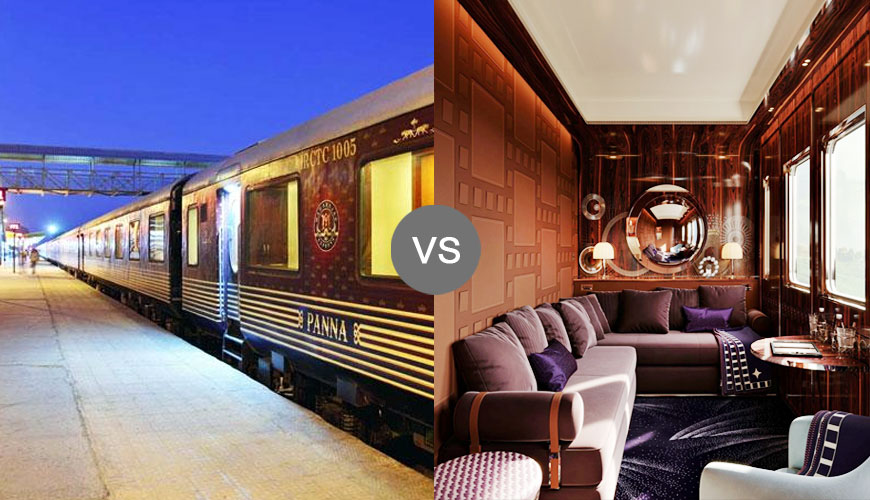
Suppose you’re in a dilemma between the Maharajas’ Express in India and the legendary Orient Express in Europe. In that case, the quick fix is to choose the Maharajas’ Express if you want a fully escorted, palace-filled journey through royal India, and the Orient Express (Venice Simplon-Orient-Express) if you want a shorter, ultra-glamorous hop between iconic European cities.
Expect journeys from 3 to 7 nights on the Maharajas’ Express and 1 to 3 nights on the Orient Express, with the best travel window between October and April for India and April and October for Europe.
Quick Facts
| Aspect | Maharajas’ Express (India) | Orient Express/VSOE (Europe) |
|---|---|---|
| Region | North & Central India (Rajasthan-focused) | Western & Central Europe (e.g. London–Paris–Venice) |
| Typical Duration | 3–4 nights or 6–7 nights | 1–3 nights per journey |
| Style | Indian royal palace on wheels; intense sightseeing | Art Deco icon; train-as-theatre, lighter sightseeing |
| Best Time | Oct–Apr (cooler, drier months) | Apr–Oct (mild European seasons) |
| Price Band (per person)* | Roughly from upper mid-4-figures to low 5-figures USD depending on cabin & length | Often similar or higher per night; total spend varies with pre/post hotels & route |
| Ideal For | First-time or repeat India visitors, culture & wildlife lovers, milestone trips | Rail romantics, European city lovers, Agatha Christie fans, short but spectacular celebrations |
| Booking Approach | All-inclusive touring, fixed itineraries through specialists like ILT | Multiple routes; often booked via luxury rail agents or direct with operator |
*Price bands are indicative; always check current season tariffs before you commit.
What’s the real difference between the Maharajas’ Express and the Orient Express?
At a high level, you’re comparing an all-inclusive cultural expedition across India with a shorter, ultra-glamourous European rail experience.
Maharajas’ Express
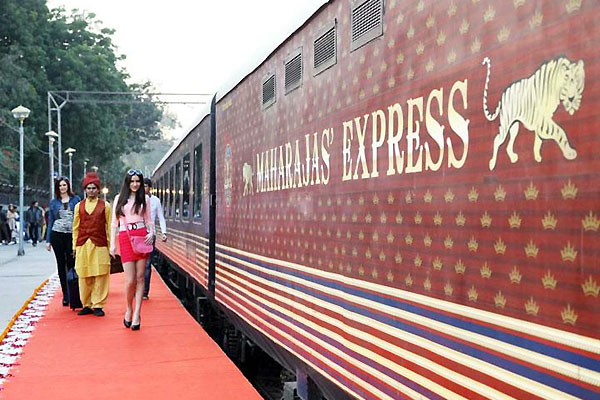
Maharajas’ Express is a luxury tourist train operated by IRCTC, running four main itineraries across North and Central India, mostly between October and April. It’s been voted “World’s Leading Luxury Train” multiple times and is widely described as India’s answer to the Orient Express.
Orient Express
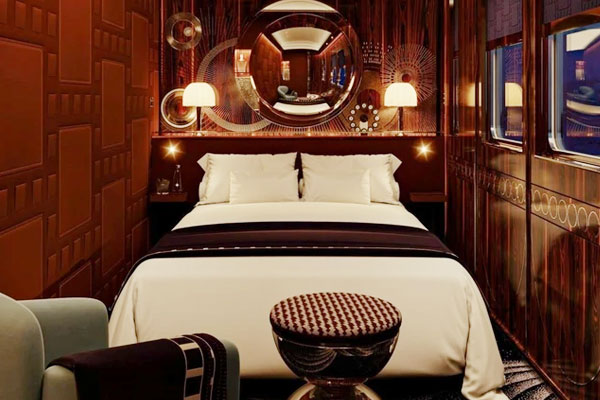
“Orient Express” today typically refers to Belmond’s Venice Simplon-Orient-Express (VSOE), a set of meticulously restored 1920s carriages operating luxury journeys between cities like London, Paris, Venice, and occasionally Istanbul.
How do history and prestige compare?
Both trains are heavyweights in different ways:
- Maharajas’ Express is young (launched in 2010) but has already won the World Travel Awards “World’s Leading Luxury Train” title in multiple years, plus other international accolades.
- The Orient Express legend dates to 1883, and Belmond’s VSOE carriages showcase original Art Deco craftsmanship and have been immortalised in literature and cinema.
If you’re chasing “historic icon” points, the Orient Express wins. If you want modern engineering dressed in royal Indian nostalgia, Maharajas’ Express is hard to beat.
Which feels more ‘royal’ in style and atmosphere?
Expect very different flavours of royalty:
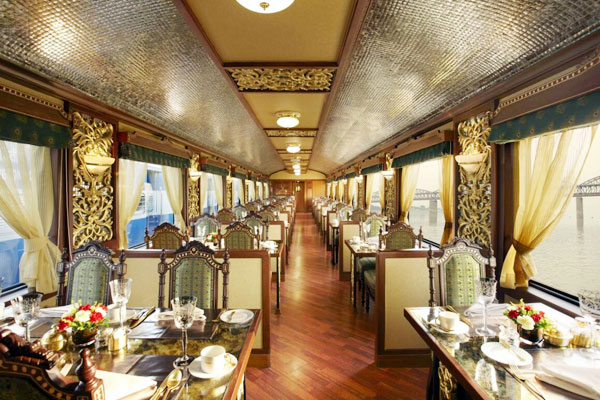
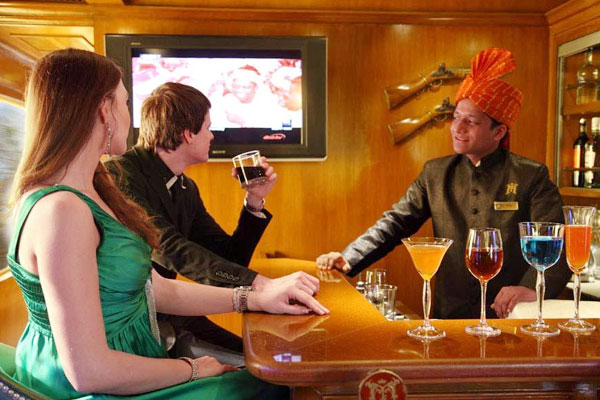
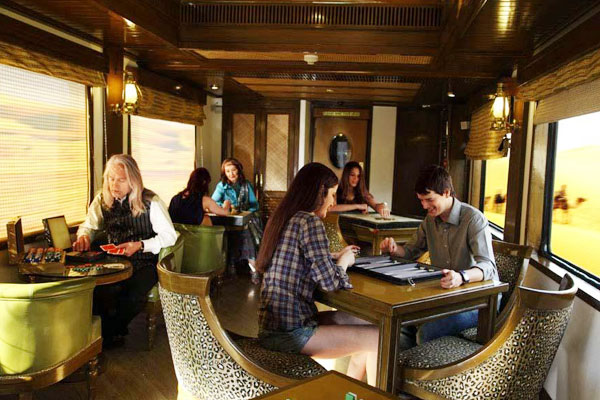
- On the Maharajas’ Express, you get red-carpet welcomes, garlands, live drummers, and staff in Indian royal livery. Interiors echo palace motifs: rich fabrics, gem-toned colour schemes, and cabin names based on precious stones.
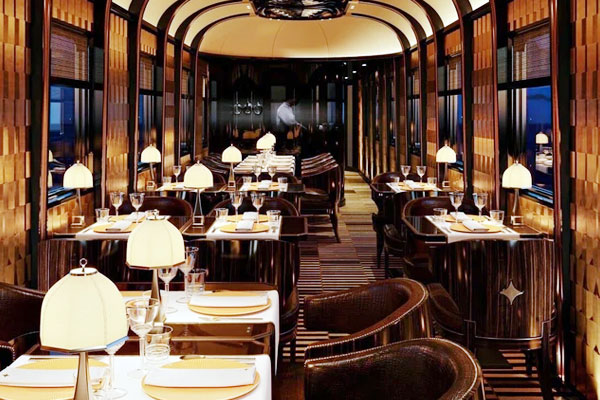
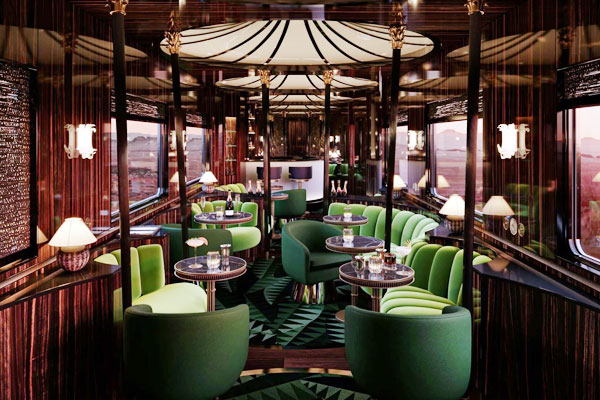
- On the Orient Express, the “royalty” is more European high society with Art Deco marquetry, Lalique glass, tuxedos in the bar car, and multi-course fine dining by candlelight.
If your idea of royal luxury is turbans, palaces, and tigers, choose Maharajas’ Express. If it’s pearls, bow ties, and Champagne in a 1920s bar car, choose Orient Express.
Who should choose the Maharajas’ Express and who should choose the Orient Express?
If you’re choosing between the two, start with your comfort zone, interests, and travel stamina.
- Choose Maharajas’ Express if you want destination-led discovery with forts, palaces, wildlife, rituals, and a lot of guided touring.
- Choose Orient Express if you see the train itself as the “event” and you’re happy to do most sightseeing before/after the rail leg.
Is the Maharajas’ Express better for first-time visitors to India?
For most high-end, first-time visitors to India, the answer is yes.
- You get escorted sightseeing to big-ticket sites like the Taj Mahal, Jaipur’s palaces, Ranthambore National Park, Varanasi ghats and more, depending on your chosen itinerary.
- The train insulates you from logistics: baggage, internal transport, monument ticketing, local guides, and most meals are bundled into one plan.
ILT can then add pre/post nights in Delhi or Mumbai, airport assistance, and any additional touring to smooth out jet lag and reduce hassle.
Which train suits honeymooners and special celebrations best?
Both are honeymoon-worthy, but in different ways:
- Maharajas’ Express:
- Suite and Presidential Suite categories offer serious privacy and space, with en-suite bathrooms and lounging areas.
- India’s palaces, sunsets, and ceremonies give you dramatic, Instagram-ready moments.
- Orient Express:
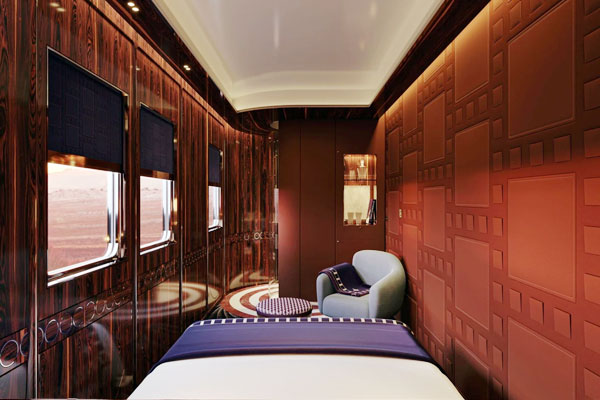
- Grand Suites with en-suites and private dining can feel like stepping into a 1920s film set.
- Ideal for short, high-impact celebrations like milestone birthdays, proposals, or anniversaries.
If you want a longer shared journey that feels like a royal tour, India wins. If you want one intense night of Art Deco glamour, Europe wins.
How do the routes and scenery compare between India and Europe?
What routes does Maharajas’ Express actually run?
Maharajas’ Express operates several itineraries; the exact line-up can change, but key journeys typically include:
- Indian Panorama (6–7 nights): Delhi – Jaipur – Ranthambore – Fatehpur Sikri – Agra – Orchha – Khajuraho – Varanasi – Delhi.
- Indian Splendor (6–7 nights): Delhi – Agra – Ranthambore – Jaipur – Bikaner – Jodhpur – Udaipur – Mumbai.
- Heritage of India (6–7 nights): Mumbai – Ajanta – Udaipur – Jodhpur – Bikaner – Jaipur – Ranthambore – Agra – Delhi.
- Treasures of India (3–4 nights): Delhi – Agra – Ranthambore – Jaipur – Delhi (a shorter, Golden Triangle-focused experience).
Expect landscapes ranging from arid Rajasthan to tiger reserves and riverfront cities.
Where does the Venice Simplon-Orient-Express go?
The VSOE route map varies by season, but core journeys include:
- London–Paris–Venice (often via Calais).
- Paris–Venice, Paris–Istanbul, and special departures to cities such as Budapest, Prague, Vienna, and Berlin.
You’ll see European countryside, mountains, and lakes from your cabin, with the real sightseeing occurring before or after the train.
Which offers more varied sightseeing and cultural immersion?
- Maharajas’ Express is excursion-heavy : multiple off-train experiences per journey, including UNESCO sites, game drives, and curated cultural evenings.
- Orient Express is rail-experience-heavy: the train itself is the attraction; you’re typically not hopping off for daily tours in the same structured way.
If you want daily guided sightseeing without repacking constantly, Maharajas’ Express is the smarter choice.
What is the onboard experience like on the Maharajas’ Express vs the Orient Express?
How do the cabins and suites compare in size and comfort?
Maharajas’ Express cabin types
- Deluxe Cabin: Compact but comfortable, with an en-suite bathroom, a large window, and either twin or double beds.
- Junior Suite: More floor space, a seating area, and a larger bathroom.
- Suite: Separate living and sleeping areas, generous en suite, butler-style service.
- Presidential Suite:Essentially an entire carriage section to yourselves, with multiple rooms and two bathrooms.
Orient Express / VSOE cabin options
- Historic Cabins:Day sofas converting into bunks at night; shared facilities historically, though updated options exist.
- Cabin Suites:Two inter-connecting cabins combined to form one bedroom and living space.
- Grand Suites/New Suites:En-suite bathrooms, convertible beds, and stylish seating areas; the most comfortable and private but also the most expensive.
In general, Maharajas’ Express cabins are more modern and consistently en suite across categories, whereas VSOE’s comfort level jumps dramatically once you’re in the suites and Grand Suites.
How are dining and bar life different on each train?
On the Maharajas’ Express:
- Two restaurant cars (often referred to as Rang Mahal and Mayur Mahal) serve multi-course Indian and international meals.
- Separate lounge/bar cars are offering house-pour wines and spirits, with some beverages included in the fare.
- Dress code is smart casual to elegant, with some guests choosing traditional Indian attire for special evenings.
On the Orient Express:
- You’ll dine in ornate Art Deco dining cars with set-time, multi-course gourmet menus.
- The bar car is famously atmospheric; many journeys encourage formal or black-tie attire, especially for dinner.
- Drinks can add up quickly; expect premium pricing for cocktails and wines.
If you dislike strict dress codes and prefer flexible fine dining, you may lean towards Maharajas’ Express. If the idea of dressing up is half the fun, the Orient Express is made for you.
How accessible is each train for older or less mobile travellers?
Brutal truth: neither train is ideal if you need full step-free access, but Maharajas’ Express does better for:
- En-suite bathrooms in most categories, so less walking at night.
- Group excursions can be paced or adjusted if you communicate needs early, especially when ILT pre-notifies the operators.
The Orient Express’ vintage hardware means narrower corridors and more steps, especially when boarding and in older station environments. If you have mobility concerns, ILT should arrange:
- Correct cabin location.
- Assistance at stations.
- Realistic excursion choices (or fewer excursions).
What do off-train excursions and daily life look like on both trains?
A typical Maharajas’ Express day might look like this:
- Early tea/coffee and sunrise views.
- Breakfast on board as the train nears the day’s destination.
- Escorted sightseeing (forts, palaces, temples, or a game drive).
- Lunch on board or at a palace/hotel.
- Afternoon rest on the train.
- Evening excursion maybe a cultural show, palace dinner, or aarti ceremony.
- Nightcap in the lounge bar as the train rolls to the next stop.
It’s structured and busy, ideal if you want maximum value from every day.
A typical Orient Express journey might look like this:
- You’ll usually board in the afternoon, enjoy a leisurely tea, then dress for dinner.
- Overnight, the train travels; you’re mostly on board.
- You’ll wake to breakfast in your cabin, perhaps brunch or lunch before arrival.
- Sightseeing happens before and after the journey in places like London, Paris, Venice, or Istanbul.
If you want your days filled with curated excursions, Maharajas’ Express wins. If you want a luxurious moving hotel between city stays, Orient Express wins.
How long should you travel, and what’s the ideal trip length for each train?
How many nights do you realistically need on the Maharajas’ Express?
For most luxury travellers:
- First-timers with limited time might choose Treasures of India (3–4 nights) for a compact Golden Triangle experience plus Ranthambore.
- Those with more time and budget should opt for 6–7 night journeys like Indian Panorama, Indian Splendour, or Heritage of India to cover more cities and add depth.
In total, think in terms of 10–14 days, including flights and pre/post nights.
How long are typical Orient Express journeys?
Core VSOE journeys are often overnight or 2-night experiences:
- London–Paris–Venice, Paris–Venice, Venice–Paris–Istanbul, etc., are typically 1–3 nights on board.
To make the most of it, pair the rail leg with 2–3 nights in each endpoint city, giving you a one- to two-week European itinerary.
Is it crazy to combine both on one ‘grand rail holiday’?
No, but it’s complex. A realistic “grand rail” plan might be:
- Week 1: London–Paris–Venice with VSOE + city time.
- Week 2: Fly to India and board the Maharajas’ Express, then add a night or two in Jaipur or Udaipur.
What are the budget and cost ranges for the Maharajas’ Express vs. the Orient Express?
Note: All figures below are indicative; actual tariffs change by season, cabin type, and offers. Always confirm current pricing.
How much does the Maharajas’ Express really cost, and what’s included?
From ILT tariff data, Maharajas’ Express pricing for major itineraries commonly falls into:
- 4-day/3-night journeys (e.g. Treasures of India): Typically, in the high four figures USD per person in Deluxe cabins, rising into the low five figures for Suites.
- 7-day/6-night journeys (e.g., Indian Splendour, Heritage of India): From roughly USD 7,800 pp in a Deluxe cabin up to around USD 25,000 pp for the Presidential Suite in recent seasons.
Your fare usually includes:
- Accommodation on board.
- All standard meals (and many snacks) plus house wines/selected drinks.
- Most excursions and entrance fees.
- Onboard entertainment and butler/attendant service.
You’ll budget extra for:
- International flights.
- Indian visa fees.
- Travel insurance, high-end spirits, spa treatments, tips, and any pre-/post-hotel.
How much should you budget for the Orient Express, including extras?
VSOE fares vary heavily by route and cabin, but for planning purposes:
- Expect several thousand USD or GBP per person for even a one-night journey in standard cabins.
- Suites and Grand Suites can quickly push the total into the high four-figure or low five-figure range for one to two nights.
On top of this, you’ll need:
- Luxury city hotels (London, Paris, Venice, etc.).
- Premium meals off the train.
- Flights to and within Europe.
Which offers better value for money for luxury travellers?
Per night, both trains are expensive, but:
- Maharajas’ Express often represents a stronger “all-in” value when you factor in transport, accommodation, guiding, and meals across multiple Indian cities.
- The Orient Express is less about “value” and more about owning a piece of travel history for a night or two.
If you’re looking for a single platform that bundles nearly everything, Maharajas’ Express usually wins. If you’re comfortable layering multiple high-end costs, VSOE is a good fit.
When is the best time to travel on each train?
What are the best months for the Maharajas’ Express in India?
Maharajas’ Express operates mainly between October and April, when conditions are more comfortable across North India.
- Oct–Nov: Pleasant daytime temperatures; some lingering humidity; good festival season (Diwali).
- Dec–Jan: Cooler, especially in Delhi and Rajasthan; mornings can be foggy in North India.
- Feb–Mar: Often the sweet spot—warmer but not too hot, clear skies.
- April: Hot in many destinations; tolerable if you’re heat-tolerant and want fewer crowds.
What are the best months for the Orient Express in Europe?
VSOE journeys typically run from spring to autumn.
- Apr–Jun: Blossom, mild temperatures, fewer crowds than peak summer.
- Jul–Aug: Peak summer; busy cities; warm nights.
- Sep–Oct: Often ideal for adults—pleasant weather, beautiful countryside, wine harvest season.
How should you time your trip if you’re sensitive to heat or cold?
- If you’reheat-sensitive, aim for Nov–Feb in Indiaand May–Jun or Sep in Europe.
- If your joints dislike cold, avoid the chilliest winter months in North India and opt for late Feb–Mar.
How do visas, safety, and practicalities compare between India and Europe rail journeys?
(Always verify current rules with official government resources or ILT before booking.)
What visa and entry requirements apply for Maharajas’ Express and India?
Most non-Indian travellers will require some form of Indian visa or eVisa, with rules varying by nationality. Common requirements include:
- Passport validity for at least six months beyond entry.
- Correct visa category (tourist), obtained in advance.
What about visas and formalities for the Orient Express in Europe?
Depending on your nationality, you may need a Schengen visa (for EU/EEA countries) and possibly separate UK visas if starting in London.
- Check that your visa covers all countries on the route and allows multiple entries where required.
Is luxury train travel in India safe for older travellers?
Luxury trains like the Maharajas’ Express are heavily controlled environments :
- Onboard security, controlled access, and vetted excursion providers.
- Group travel reduces the risk of getting lost or hassled.
- Staff are used to supporting older guests and can coordinate with local medical facilities if needed.
Still, you need travel insurance, normal precautions with valuables, and basic health disclosure to your planner.
What health and insurance considerations should you plan for?
For both trains, you should:
- Carry comprehensive tra vel medical and cancellation insurance.
- Disclose mobility or dietary issues in advance so ILT can coordinate with train operators.
- Check with a doctor on any vaccines or medications recommended for your age and health profile.
Where should you stay before and after each train journey?
Best pre/post stay ideas for the Maharajas’ Express in India
You’ll typically start or end in Delhi or Mumbai, sometimes including Jaipur or Agra. Sensible patterns:
- Before the train: 2–3 nights in Delhi (Old & New Delhi touring) or Mumbai (Colaba, heritage hotels).
- After the train: Add 2–4 nights in Udaipur, Jaipur, or Goa for a slower-paced finish.
ILT frequently works with heritage palaces and top-tier chain hotels ; the exact choice will match your comfort level and budget.
Best pre/post stay ideas for the Orient Express in Europe
Common combinations:
- London + Paris + Venice:
- London: 2–3 nights (theatre, museums, classic hotels).
- Paris: 2–3 nights (food, art, Seine cruises).
- Venice: 2–4 nights (canals, islands, lagoon views).
- Extensions to Lake Como, the Amalfi Coast, Vienna, Prague, and Budapest, depending on your route.
How to book Maharajas’ Express with Indian Luxury Trains
Why use a specialist agent instead of booking everything yourself?
Because you’re dealing with:
- Limited cabin inventories and rigid departure dates.
- Different currencies, cancellation rules, and seasonal nuances.
- Complicated visas and health requirements if you’re crossing multiple regions.
How does Indian Luxury Trains support you before, during, and after your trip?
For Maharajas’ Express and partner products, ILT typically:
- Conducts an initial consultation call/email to understand your dates, health needs, and celebration type.
- Provides detailed quotations that break down cabin types, inclusions, and clear exclusions.
- Manages reservations, deposits, and balance payments with reminders.
- Coordinates on-ground support (transfers, meet-and-greet, local guides).
- Provides emergency contact support during travel (re-routing if flights misbehave, etc.).

Comment (0)