

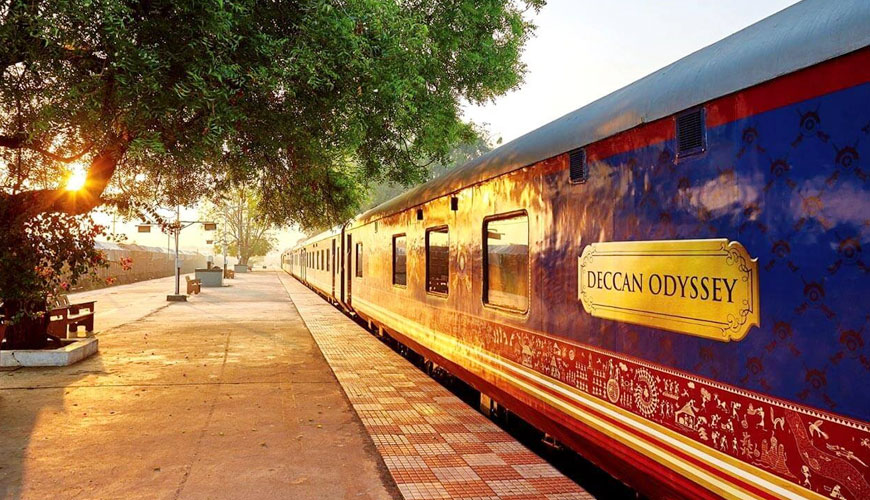
If you’re trying to understand how much India’s luxury trains really cost, here’s the short answer: expect to pay from around USD 4,500–7,000 per person for shorter journeys and USD 8,000–20,000+ per person for longer, suite-level itineraries once you add flights, hotels and extras. The fare usually includes your cabin, all meals, and most excursions but doesn’t cover flights, visas, insurance, tips, many drinks, or personal expenses.
This guide breaks down India’s luxury train costs across Maharajas’ Express, Palace on Wheels, Deccan Odyssey and The Golden Chariot. It shows you what’s included, what isn’t, and how to build a realistic door-to-door budget.
India Luxury Train Pricing – At a Glance
| Item | Snapshot |
|---|---|
| Main trains covered | Maharajas’ Express, Palace on Wheels, Deccan Odyssey, The Golden Chariot |
| Typical journey length | 3–4 nights or 7 nights/8 days |
| Typical per-person fare (train only) | Roughly USD 4,900–14,000+ per person, depending on train, season and cabin; top suites can exceed USD 20,000 per cabin. |
| What fares usually include | En-suite cabin, all meals, soft drinks/house beverages, guided excursions, entrance fees, onboard entertainment, porter service (varies by train). |
| What fares usually exclude | International/domestic flights, visa, travel insurance, many alcoholic drinks, tips, spa, laundry, camera fees, optional tours, festival surcharges, pre/post hotels. |
| Best time to go (comfort + value) | October–March for weather; October, early December, and February–March often offer better value than Christmas/New Year weeks. |
| Ideal traveller | Couples 45+, retirees, honeymooners and families who prefer comfort, safety and “one-ticket” convenience to DIY planning. |
What will you actually learn about the luxury train cost in India on this page?
You’ll get a straight, numbers-first answer to:
- How much the main Indian luxury trains really cost per person,
- What’s included in the fare on each,
- The “hidden” extras you still need to budget for,
- How factors like season, cabin type and traveller type affect what you pay, and
- How to use Indian Luxury Trains to get a clean cost breakdown and custom itinerary without wasting hours on tariff PDFs.
What does “India luxury train cost” actually cover (and not cover)?
At the simplest level, the cost of an India luxury train splits into two layers:
- Train fare – what you pay to be on board
- Total trip cost – what you pay for everything around the train
Train fares generally cover:
- Your private en-suite cabin for the journey
- All main meals on board
- Tea/coffee/mineral water and sometimes house wines, beer or spirits
- Guided off-train excursions with entrance fees (palaces, forts, monuments, parks)
- Shared coach or jeep transport during excursions (private vehicles for top suite categories on some trains)
- Onboard entertainment and basic porter service at stations
Train fares typically do not cover:
- International flights to/from India
- Domestic flights before or after the train
- Visa fees and travel insurance
- Most tips and gratuities (train staff, guides, drivers)
- Premium alcoholic drinks, spa treatments, laundry, and telephone bills
- Camera/video fees at some monuments
- Optional excursions, exceptional experiences and pre/post-tour hotels
The page you’re reading focuses on both layers, so you don’t under-budget the overall trip.
Which luxury trains in India does this pricing guide cover?
This guide covers the four main luxury trains that most international guests consider:
- Maharajas’ Express – often ranked among the world’s leading luxury trains; multiple pan-India itineraries, including the Golden Triangle.
- Palace on Wheels – India’s original luxury train; a 7-night Rajasthan & Agra circuit with a strong heritage vibe.
- Deccan Odyssey – a multi-route luxury train covering Maharashtra, Rajasthan, Gujarat, and Karnataka, depending on the itinerary.
- The Golden Chariot – South India–focused train with itineraries like Pride of Karnataka and Jewels of South, combining heritage sites, wildlife and coast.
| ILT also features semi-luxury and thematic trains (e.g., Buddhist Circuit) at lower price points, but this guide stays focused on the top-tier luxury rail segment. |
How much do India’s luxury trains cost per person in 2025–2027?
For current seasons, expect around USD 4,900–7,000 per person for the shorter 3–4-night journeys and USD 8,000–14,000+ per person for full 7-night itineraries in standard cabins. Suites and Presidential Suites can push that higher, especially in peak season.
These bands are based on current published tariffs for Maharajas’ Express, Palace on Wheels, Deccan Odyssey, and The Golden Chariot and may change with future schedule updates and currency movements.
What are the typical per-journey price ranges by train?
- Maharajas’ Express
- Shorter 3–4-night itineraries (e.g., Treasures of India) often sit in the USD ~4,900–8,600+ per person range in Deluxe / Junior Suite cabins.
- 7-night itineraries (Indian Splendour, Heritage of India, Indian Panorama) typically range from about USD 7,800–15,600 per person in Deluxe/Junior Suites, rising to USD 25,000+ for top suites.
- Fares are published in USD and GBP with clear single-supplement figures.
- Palace on Wheels
- Per-night tariffs for international travellers in 2025–26 are around:
- Double occupancy: USD 864–976 per person per night
- Single occupancy: USD 1,328–1,501 per person per night
- A standard 7-night journey therefore lands in the USD 6,000–8,000+ per person band for most cabins, with suite cabins higher.
- Per-night tariffs for international travellers in 2025–26 are around:
- Deccan Odyssey
- Current packages are typically advertised at USD ~9,330 per person for 7-night itineraries in standard cabins, with suites priced higher.
- The Golden Chariot (e.g., Pride of Karnataka)
- For Pride of Karnataka (5 nights/6 days), current tariffs show:
- Deluxe Cabins: about USD 4,740–5,000 per person
- Single supplement: USD 3,560–3,800 per person
- Deluxe Cabins: about USD 4,740–5,000 per person
- Other itineraries (e.g., Jewels of South) sit in similar overall ranges.
- For Pride of Karnataka (5 nights/6 days), current tariffs show:
| Want a current season quote in your currency? Connect with ILT’s experts now! |
What factors change the fare (season, cabin, occupancy, promotions)?
The headline tariff for any journey is only the start. The price you actually pay is affected by:
- Season
- Peak: Typically Oct–Dec and late Jan–Feb, plus Christmas / New Year departures; fares are at the top of the published band, and some trains apply festive surcharges of ~10%.
- Shoulder: Early October, late February, and March – often more availability and deals.
- Lean: Some late-season April runs; suitable for travellers who can handle higher day temperatures.
- Cabin category
- Standard Deluxe cabins, Junior Suites, Suites and a Presidential Suite on some trains.
- Upgrading can double or more the fare, but for many guests, a Deluxe/Junior Suite already feels very indulgent.
- Occupancy
- Luxury train pricing is per person, assuming double occupancy.
- Single supplements for solo travellers can be steep – sometimes close to 75%–100% extra vs double-sharing.
- Nationality & tax:
- Some trains publish separate tariffs for Indian nationals and international guests, in INR and USD.
- Local GST or other taxes may be added to the base fare.
- Promotions & discounts:
- Selected departures may carry companion offers, early-bird discounts or group savings.
- These change constantly; ILT’s advantage is visibility across operators and dates.
What is usually included in Indian luxury train fares?
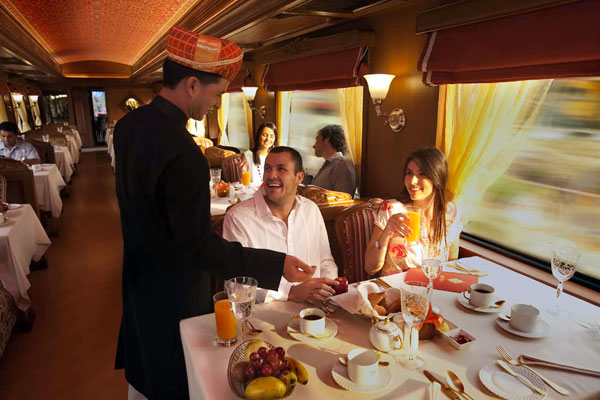
For the cost, you’re effectively buying a moving 5-star hotel + guided tour package. Across major trains, inclusions broadly cover:
- Accommodation
- En-suite, air-conditioned cabins with fine furnishings, private bathrooms, 24-hour hot/cold water, and often butler-style service at higher cabin categories.
- Dining
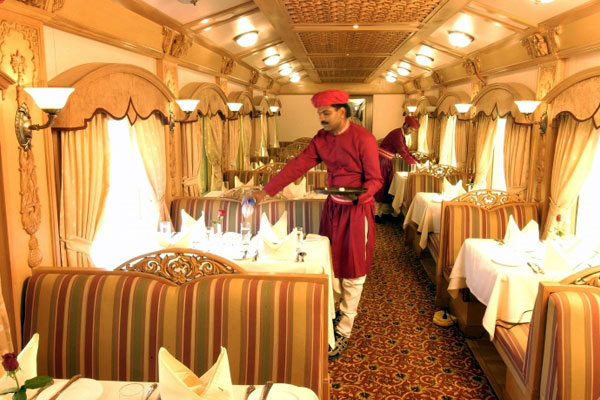
- All main meals (breakfast, lunch, high tea, dinner) are served in elegant restaurant cars.
- Menus combine Indian regional cuisines with continental or international options, accommodating everyday dietary needs.
- Beverages (varies by train)
- Unlimited tea, coffee, bottled water.
- On some trains, house wines, beer and selected spirits are included for certain cabin categories; premium brands are extra.
- Guided excursions
- Onboard services
- Luggage handling at stations.
- Basic wifi in some coaches (varies, and often intermittent).
- Lounge and bar access, sometimes spa / small gym (treatments charged separately).
- Taxes (partially)
- In many tariffs, basic onboard taxes are included, but GST or service tax might be itemised separately for Indian nationals.
What’s not included – the “hidden” costs most guests forget?
Even with “all-inclusive” trains, there are predictable extras you should budget for.
International flights, visas and insurance
- Flights to/from India are always separate. Fares vary massively by season and origin (US/UK/Aus/Europe).
- Visas: e-visas for many nationalities, but fees, paperwork, and lead times apply.
- Travel insurance: strongly recommended; not part of train fares.
Tips, premium drinks, spa, laundry and personal expenses
- Tips/gratuities to train staff, guides and drivers are not included in the fare and are either pooled or left to your discretion.
- Laundry, telephone calls, spa treatments, and premium/imported alcohol are extra.
Optional tours, camera fees and festival surcharges
- Some departures or itineraries offer optional add-on visits or upgrades at an extra cost.
- Many Indian monuments charge separate camera/video fees for professional or large cameras.
- Christmas/New Year departures can carry a 10% festive surcharge on Palace on Wheels and similar trains.
Single supplements and extra nights
- Solo travellers almost always pay a single supplement, sometimes close to the full additional cabin cost.
- You will need hotel nights before and after the train in gateway cities (Delhi, Mumbai, Bengaluru, etc.).
How do route and itinerary length affect what you pay?
Shorter journeys (3–4 nights):
- Used by Maharajas’ Express and some seasonal routes.
- Excellent if you want a “sampler” and to combine train with hotel-based touring.
- Lower total cost, but per-night rates still sit at the higher end.
Full journeys (7 nights / 8 days):
- Palace on Wheels, core Deccan Odyssey/Golden Chariot itineraries, and several Maharajas’ Express routes.
- Better immersion and better use of the time you spent flying to India.
- Total outlay is higher, but if you amortise flights and fixed costs, the value per day can be acceptable for a once-in-a-lifetime trip.
Planner’s Advice:
If you’re flying from North America, Europe or Australia, a 7-night luxury train as the centrepiece of a 10–14 day itinerary makes more sense than a 3-night sampler, unless you’re extremely price-sensitive.
When is the best time to travel for both comfort and value?
Most luxury trains operate roughly from September/October to April, pausing in the hottest months.
- October–mid-December:
- Pleasant weather in North India and Rajasthan; high demand but usually not as expensive as Christmas–New Year.
- Late December–early January:
- Peak demand, premium pricing, and surcharges on some trains.
- Late January–March:
- Often the sweet spot: stable weather, slightly better value and good availability.
- April:
- Warmer; can be a good value if you tolerate heat and prefer fewer crowds.
How can you reduce India luxury train cost without downgrading the experience?
You reduce cost by playing with variables that don’t gut the experience.
- Pick the right train and route for your interests
- Don’t overpay for a wildlife-heavy itinerary if you don’t care about safaris; choose routes that align with what you’d otherwise spend on hotels + transfers + private tours.
- Travel in the shoulder season rather than the Christmas/New Year
- You’ll often dodge surcharges and still enjoy good weather.
- Choose Deluxe or Junior Suite instead of the top suites
- Deluxe cabins are already very comfortable; suites mainly add space and exclusivity.
- Use shorter itineraries smartly
- For example, combine Maharajas’ Express Treasures of India (3 nights) with regular hotels in Delhi/Agra/Jaipur, instead of paying for the entire week at train rates.
- Leverage group and early-booking deals
- Operators and agencies sometimes offer companion discounts or group rates, particularly for September/early-season departures.
- Optimise your flight and pre/post hotel strategy
- Fly into the closest practical gateway (Delhi / Mumbai / Bengaluru), cluster your hotel nights strategically and avoid backtracking.
| Talk to our luxury rail experts about shoulder-season departures and current offers before you lock dates. |
What does life actually look like on board an Indian luxury train (and how does that justify the price)?
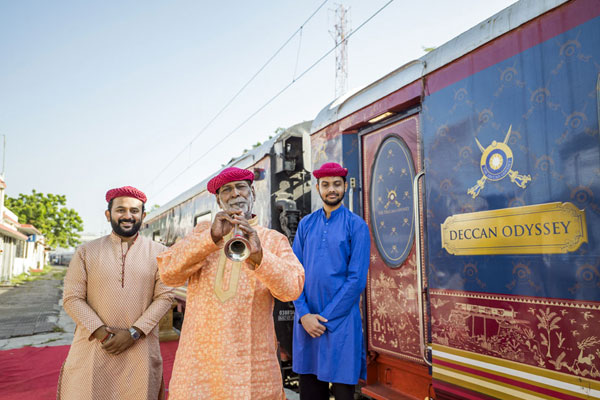
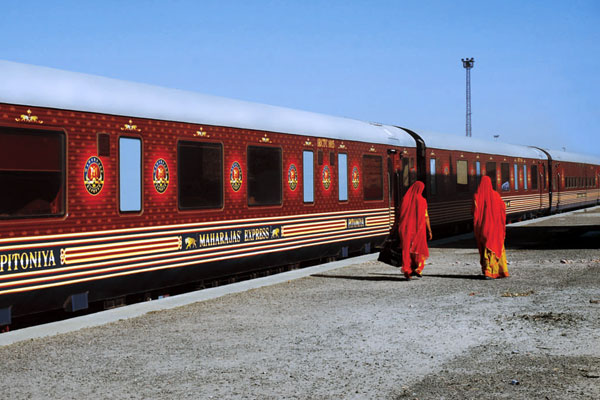
The price is not just for moving from A to B; it’s for how you move. On these trains, you can expect:
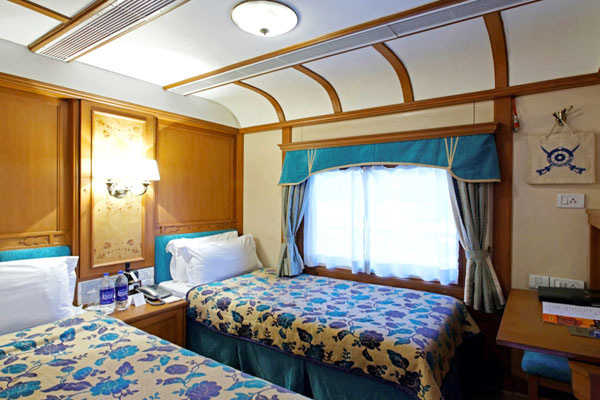
- Stylish cabins modelled on royal carriages – polished wood panelling, rich fabrics, curated artwork.
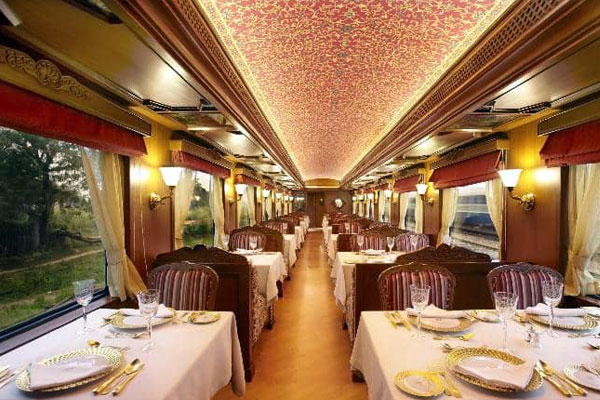
- Two fine-dining restaurant cars serving multi-course meals with regional specialities and international options.
- Bar/lounge cars where you can relax with fellow guests over drinks as the landscape rolls past.
- High crew-to-guest ratio, with staff remembering your preferences within a day or two.
- Occasional onboard cultural performances, themed evenings or talks about the region.
What kind of excursions and special experiences are you paying for?
Your fare typically includes:
- Guided tours of major forts and palaces – Jaipur’s Amber Fort, Udaipur City Palace, Jodhpur Mehrangarh Fort, etc.
- Visits to UNESCO World Heritage Sites like the Taj Mahal, Ajanta & Ellora Caves, Hampi, and Khajuraho.
- Wildlife experiences such as game drives in Ranthambore or other reserves.
- Cultural evenings – folk dances, puppet shows, local music.
- Special access moments (e.g., private courtyards, curated dining experiences in heritage venues).
On a per-day basis, if you cost out a 5-star hotel + private driver + guide + entrance fees + a curated special experience, you’ll see why the combined train package is expensive but not inherently unreasonable.
Why book through Indian Luxury Trains instead of directly with each operator?
ILT sits at the intersection of all major trains and complete India tours:
- ILT is the luxury-train-focused brand of Indian Holiday Pvt. Ltd., an inbound DMC founded in 1990, with National Tourism Awards, Ministry of Tourism recognition, and millions of guests handled.
- ILT’s journeys page consolidates Palace on Wheels, Maharajas’ Express, Deccan Odyssey, Golden Chariot and more with dates, routes and tariffs in one place.
- For you, that translates into:
- Neutral comparison between trains (not just pushing one brand).
- Access to current promos and better visibility on which departures are genuinely good value.
- The ability to bolt on hotels, domestic flights, extensions and special experiences into a single, protected booking.
What happens after you request a quote from ILT?
You can turn this into a simple bullet flow:
- Share your dates, route ideas and budget via ILT’s enquiry forms (or by email/phone).
- A luxury rail specialist contacts you, checks your preferences and suggests suitable trains and departure dates.
- You receive a detailed proposal with:
- Train recommendations,
- Cabin category,
- Published tariff + any applicable promotions,
- Door-to-door cost estimate including hotels and transfers.
- Once you confirm, ILT holds cabins where possible, issues invoices and payment links, and guides you through the visa and documentation process.
- Before departure, you get a clear, written breakdown of what’s included, what isn’t, tipping guidance and packing tips.

Comment (0)