

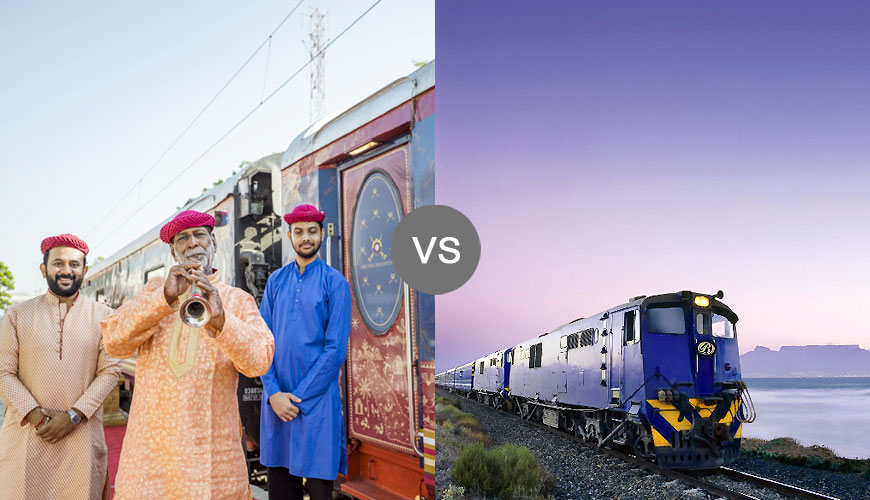
If you’re confused between India’s Deccan Odyssey and South Africa’s Blue Train, the short version is simple:
Pick Deccan Odyssey if you want a week-long royal rail journey through India’s forts, palaces, Taj Mahal and tiger country, with a full itinerary of excursions and culture.
Pick the Blue Train if you want a 2-night, ultra-pampered rail segment linking Pretoria and Cape Town, usually wrapped inside a broader South Africa trip with safaris and Cape Winelands.
Both are five-star, all-inclusive experiences, but they deliver very different trips. Deccan Odyssey typically fits into a 10–14-day India itinerary in the cooler months (Oct–Mar), while the Blue Train is a 54-hour journey that works best between Mar–May and Sep–Nov as part of an 8–12-day South Africa holiday.
Indian Luxury Trains (ILT) acts as your specialist planner for Deccan Odyssey and India’s other luxury trains, advising honestly on how they stack up against global icons like the Blue Train and helping you design a complete, low-stress trip around whichever you choose.
Quick Facts – Deccan Odyssey vs the Blue Train
| Feature | Deccan Odyssey (India) | Blue Train (South Africa) |
|---|---|---|
| Typical journey length | 7 nights/8 days | 2 nights/3 days (54 hours) |
| Main routes (examples) | Delhi / Mumbai with Agra (Taj Mahal), Jaipur, Udaipur, Jodhpur, Ellora Caves, Ranthambore | Pretoria ↔ Cape Town; annual Pretoria ↔ Kruger National Park departure |
| Core experience | Heritage cities, forts, palaces, UNESCO sites, and wildlife safari | Classic 5-star hotel-on-wheels through Karoo desert, Winelands and cityscapes |
| Best time to go | Oct–Mar (calmer, clearer), limited departures | All year except June; best Mar–May and Sep–Nov |
| Typical rail budget (per person) | From around USD 9,330–13,300 (Deluxe cabin, 7 nights) | Roughly USD 2,100–3,700 per person sharing, one-way Pretoria–Cape Town |
| Ideal for | First-time or repeat India, culture lovers, “grand tour” travellers | Safari-focused South Africa trips, rail enthusiasts wanting a shorter but intense luxury segment |
| Pace | Busy: daily excursions, early starts, multiple cities | Relaxed: long stretches on board, 1–2 key excursions |
Which should you pick the Deccan Odyssey or the Blue Train?
If you want one big rail-based holiday rather than a quick add-on, Deccan Odyssey wins. If you want a short, ultra-polished rail trip inside a broader safari trip, the Blue Train is the obvious choice.
Choose Deccan Odyssey if you:
- Want 7 nights of immersive travel with daily off-train excursions (Taj Mahal, Jaipur, Udaipur, Jodhpur, Ellora Caves, Ranthambore).
- Prefer a single, all-inclusive rail product to carry most of your trip.
- Are happy with a busier schedule and can manage some walking and early starts.
Indian culture, history and food and comfortable with some sensory overload.
Choose the Blue Train if you:
- Already planning a safari-first South Africa itinerary and want a 2-night luxury rail segment between Pretoria and Cape Town.
- Prefer a slower on-board pace and fewer excursions.
- Value butler service, high tea, cigars and formal dinners as the focus rather than daily sightseeing.
Do both if you:
- Are planning two major trips (one to India, one to South Africa) in the next 3–5 years, or a more extended multi-country sabbatical.
- Want to “collect” the world’s top luxury trains and are comfortable with the combined budget.
How do the Deccan Odyssey and the Blue Train compare at a glance?
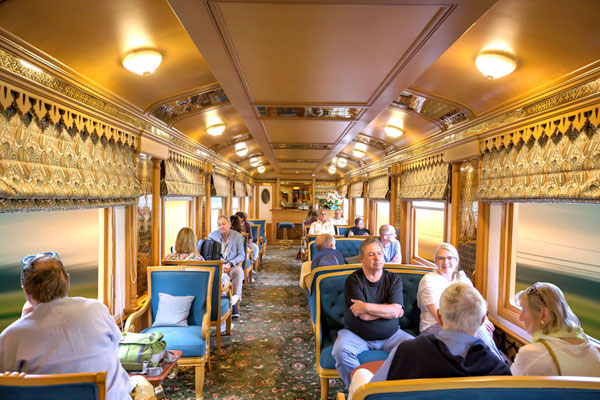
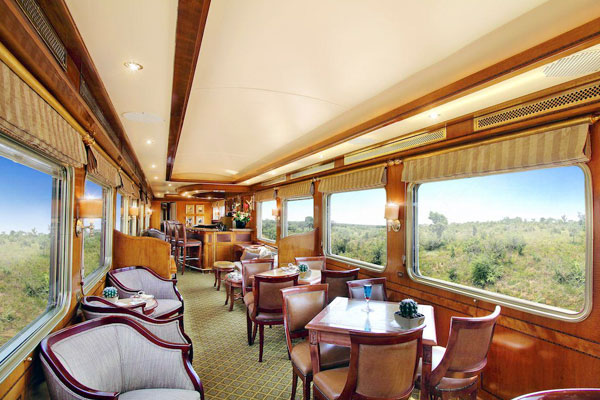
At a high level, Deccan Odyssey is a complete Indian touring holiday in rail form, while the Blue Train is more like a short, ultra-luxurious “floating hotel” linking two South African hubs.
Key differences you actually care about:
Length & intensity
- Deccan Odyssey: 7 nights with daily excursions – you wake up in a new destination most days.
Blue Train: 2 nights, mostly on-board relaxation with 1–2 signature excursions.
Scenery & themes
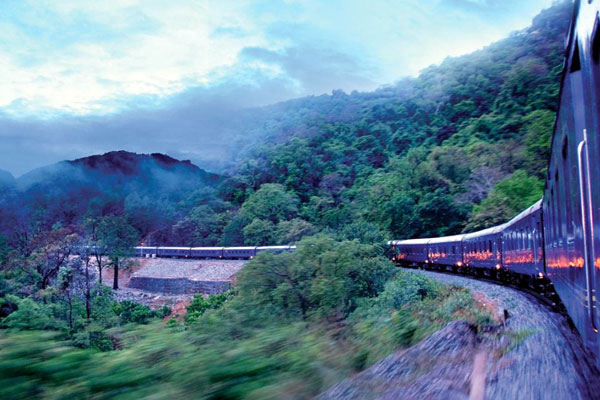
- India: forts, palaces, old bazaars, Mughal architecture, desert and tiger country.
- South Africa: semi-desert Karoo, mountains, Winelands and dramatic Cape coastline, plus optional Big Five safari.
On-board vibe
- Deccan Odyssey: Indian royal-era styling, strong focus on traditional hospitality and cultural programming.
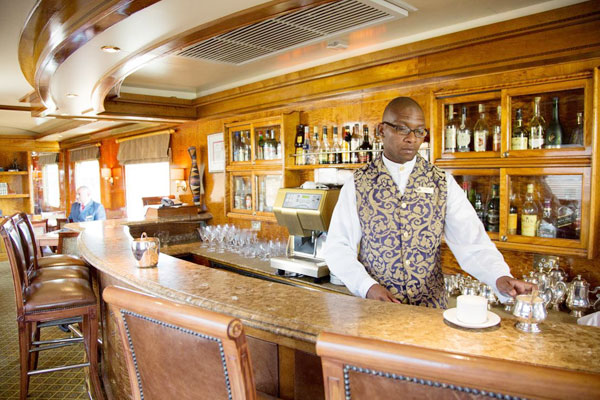
- Blue Train: clubby, 5-star-hotel feel with formal evenings, cigars and cognac, and a complete butler system.
Budget & value
- Deccan Odyssey: Higher absolute spend (7 nights) but strong “trip value per day” if you want India to be your primary focus.
- Blue Train: Cheaper in absolute terms but higher per-night cost; you still need extra hotels and safari lodges around it.
When is the best time to ride Deccan Odyssey vs the Blue Train?
Best season for the Deccan Odyssey
Deccan Odyssey runs a limited season, typically between October and March/April, when North India is cooler and drier.
- October–November:
- Pleasant days, some lingering humidity in Mumbai and Maharashtra.
- Good time for Rajasthan and the Taj Mahal before peak crowds.
- December–February:
- Cool, often chilly mornings and evenings in Delhi, Agra and Rajasthan; excellent daytime sightseeing.
- Some winter fog around Delhi/Agra early mornings, but the train’s schedule usually builds this in.
- March–early April:
- Warmer, edging into hot, but still manageable if you’re heat-tolerant.
- Better tiger-spotting prospects in Ranthambore as water sources shrink.
For older or heat-sensitive travellers, aim for late Nov–Feb. Travellers prioritising wildlife can choose March for stronger tiger chances.
Best season for the Blue Train
The Blue Train operates on a weekly schedule for the Pretoria–Cape Town route most of the year (with a typical gap in June), plus an annual trip to the Kruger National Park.
- March–May (SA autumn):
- Mild days, cooler nights, clearer skies.
- Excellent comfort on board and a good time for Cape Town & the Winelands.
- June–August (winter):
- Some schedules pause; when it runs, expect cold nights but excellent safari conditions in Kruger if you’re combining.
- September–November (spring):
- Peak Blue Train season – comfortable temperatures, wildflowers in parts of the Western Cape, excellent views.
- December–February (summer):
- Warmer, busier in Cape Town; still fine on board thanks to strong climate control.
What is the on-board experience like on Deccan Odyssey vs the Blue Train?
How do cabins and suites compare?
- Deccan Odyssey
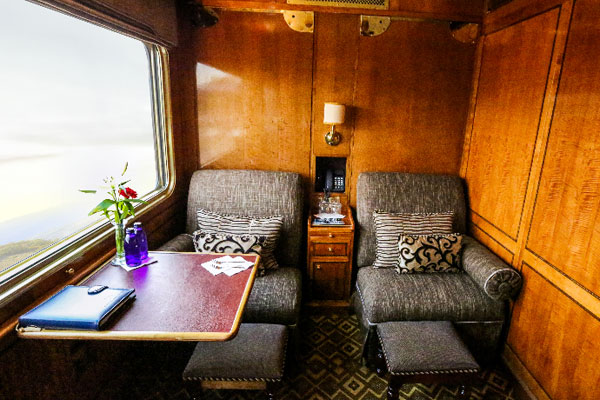
- Cabins: Deluxe Cabins and a limited number of Presidential Suites, styled like a royal carriage with Indian heritage motifs.
- Facilities: En-suite bathrooms, modern climate control, storage, and picture windows.
- Layout: More “train-like” proportions but comfortable for a week-long stay.
- Blue Train
- De Luxe suites: 4m x 2m with either a double bed + bath or twin beds + shower.
- Luxury suites: 5.13m x 2m with larger footprint, double or twin beds, and upgraded finishes.
- Bathrooms: Italian marble, gold-plated fittings, under-floor heating, full-size tub or shower.
How do dining, bars and lounges differ?
- Deccan Odyssey
- Two elegant restaurants with Indian and international menus.
- Bar car for pre-dinner drinks and socialising.
- Occasional palace banquets and off-train gala dinners in Rajasthan, plus themed evenings on board.
- Blue Train
- Single fine-dining restaurant car that feels like a formal hotel restaurant, with white linen, crystal and silver.
- Club Car for cigars and cognac, plus a lounge car where High Tea is served.
- Menus highlighting South African produce (Karoo lamb, venison, oysters, etc.), plus excellent accommodation of dietary needs.
What about dress code, service and atmosphere?
- Deccan Odyssey: Smart-casual by default; you’ll see resort-style clothing by day and slightly dressier outfits at dinner. Service has the warm, attentive feel of India’s better heritage hotels.
- Blue Train: More formal; shorts and flip-flops are discouraged, and many guests dress up in jackets and cocktail dresses for the evening service. The atmosphere in the Club Car is very “old-world club + safari chic”.
What excursions and off-train experiences can you expect?
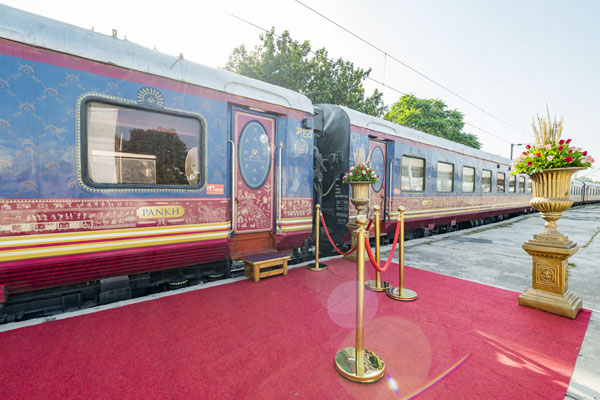
Excursions on the Deccan Odyssey
- Every day (barring the odd relaxed morning), you’ll have a structured excursion:
- Delhi/Mumbai: City highlights pre- and post-trip, depending on the itinerary.
- Agra: Taj Mahal, Agra Fort, and local handicraft markets.
- Jaipur: Amber Fort, City Palace, Hawa Mahal and bazaars.
- Udaipur: City Palace, Lake Pichola cruise and a palace or heritage lunch.
- Ranthambore: Morning or afternoon tiger safari + village visit and lodge high tea.
- Vadodara, Ellora Caves and others: UNESCO sites, palaces, museums and curated cultural shows.
Excursions on the Blue Train
The Blue Train is more selective:
- Kimberley stop (Pretoria–Cape Town route): Big Hole and Open Mine Museum – diamond rush history, views over the massive open-cast mine, and some time to stretch your legs.
- Kruger extraordinary departure: Full day in Kruger National Park with game drives and lunch, sandwiched between ultra-relaxed time on board.
How much do the Deccan Odyssey and the Blue Train really cost?
Deccan Odyssey cost and what’s included
- Deluxe Cabin:
- USD 9,330 – single occupancy.
- USD 13,300 – twin/double occupancy for two guests (total).
- Presidential Suite:
- From around USD 20,000 per suite.
Tariffs typically include:
- Accommodation on board for all 7 nights.
- All meals plus soft drinks with meals.
- Excursions, monument and park entrance fees.
- Guided tours with English-speaking guides.
- Some exceptional experiences (palace dinners, cultural performances).
You’ll still add:
- International flights to/from India.
- Pre/post-train hotel nights.
- Visas, travel insurance, tips and any optional hotel spa or shopping.
Blue Train cost and what’s included
For the Pretoria ↔ Cape Town route (one way, per person sharing):
- Low season (Jan–Aug & Nov– Dec):
- De Luxe Suite: ZAR 36,325
- Luxury Suite: ZAR 46,345
- High season (1 Sep–15 Nov):
- De Luxe Suite: ZAR 44,840
- Luxury Suite: ZAR 56,625
Inclusions typically cover:
- 2 nights on board the Blue Train.
- All snacks, meals and most drinks (including many alcoholic beverages and cigars).
- One night in a 5* hotel pre- or post-journey.
- Transfers between the station and the hotel.
- Butler service, Wi-Fi and off-train excursion.
- Exclusions: French champagne, caviar, long-distance calls and gratuities.
Which train offers better value?
The honest view:
- Per night, the Blue Train is more expensive than the Deccan Odyssey’s Deluxe Cabin.
- Total rail spend is higher on the Deccan Odyssey because you’re buying 7 nights instead of 2.
- If you want one considerable, anchor experience and don’t want to keep changing hotels, Deccan Odyssey delivers more “holiday per decision”.
- If you’re already in South Africa for safari and Cape Town and want a luxurious way to move between them, the Blue Train is a very efficient add-on.
Who are these journeys best for?
Deccan Odyssey is best for you if:
- You want your luxury train to be the core of a 10–14-day India holiday, not just a side dish.
- You’re motivated by history, architecture, culture and local life.
- You’re comfortable with early starts, coach transfers and walking through historic sites.
- You’re happy with varied stimuli – street life, markets, music, colour, and occasional crowds.
The Blue Train suits you if:
- You want a comfort-first, slow-paced experience where the train is as much about the lounge, bar, and dining car as it is about the view.
- You’re already planning a Cape Town + safari itinerary and would like an iconic rail segment between hubs.
- Formal evenings, cigars, club-car ambience and highly personalised butler service are part of your “must-have” list.
Is it worth doing both the Deccan Odyssey and the Blue Train?
If you’re the kind of traveller who:
- Plans two big trips in the next 3–5 years,
- Values different forms of scenery and culture,
- And has the budget for multiple long-haul flights,
- Then yes, there’s a strong case for doing the Deccan Odyssey on one trip and the Blue Train on another.
How do you get there – flights, visas and logistics?
Deccan Odyssey’s starting point and Indian visas
- Most itineraries start or end in Delhi or Mumbai, both with excellent long-haul connectivity from the US, UK and Europe.
- You typically arrive 1–2 nights before to recover from jet lag and have a safety buffer for delays.
- India uses an eVisa system for many nationalities; processing times and requirements change, so you treat online info as a starting point and check official sources or your visa service before finalising dates.
Blue Train’s starting point and South African visas
- For Pretoria departures, fly into Johannesburg (JNB) and transfer to Pretoria or Irene Country Lodge as per Blue Train check-in instructions.
- For Cape Town departures, simply stay in Cape Town for a few nights before the train.
- Visa rules depend on your passport; many Western travellers can get visa-free short stays, but it’s still your job to confirm up-to-date entry conditions and any health requirements (e.g., yellow fever if transiting certain countries).
Is it safe and practical if you’re 60+?
Broadly, yes, if you set expectations correctly and design the trip around your comfort:
- Both trains offer private cabins with en-suite bathrooms, climate control and 24-hour staff support.
- Off-train excursions can often be softened (shorter walks, more vehicle use, splitting from the leading group) if you in advance.
- The main risk for older travellers is over-scheduling – trying to cram long walking days before/after the train equating “value” with maximum activity.
Where should you stay before and after each train?
- Before/after Deccan Odyssey:
- Delhi: central or heritage areas with easy access to main sights.
- Mumbai: South Mumbai (Colaba/Fort) for colonial architecture and the Gateway of India.
- Before/after the Blue Train:
- Cape Town: Waterfront or City Bowl for views and restaurants.
- Pretoria: upmarket suburbs or the Irene Country Lodge as per Blue Train pre-check-in.
What practical tips and etiquette should you know?
Deccan Odyssey
- Dress: Light, modest clothing for day; a shawl/light jacket for cooler winter evenings.
- Shoes: Closed, comfortable footwear with grip – essential for fort steps and uneven old cities.
- Tipping: Staff gratuities are generally pooled; ILT can advise the latest recommended guideline per cabin.
- Health: Stick to bottled water, be sensible with street food, and build in downtime to avoid burnout.
- Culture: Cover shoulders and knees for temples and mosques; ask before photographing people.
Blue Train
- Dress code: Smart-casual by day, smart/semi-formal at night; leave beachwear and flip-flops for hotels.
- Tipping: There’s usually a gratuity box on the Blue Train; tips are shared among staff – a simple, cash-based system.
- Smoking: Smoking is confined to designated areas such as the smoking Club Car.
- Security: Normal big-city precautions in Johannesburg/Cape Town; keep jewellery subtle and bags closed.
- Safari etiquette: Listen to the ranger’s instructions, keep your voice low, and do not stand up or dangle limbs outside the vehicle near animals.
How does booking through Indian Luxury Trains actually help?
- ILT isn’t just blogging about these trains; it’s a specialist luxury rail concierge based in India, with 35+ years of experience planning and operating rail-based itineraries across India’s luxury trains.
- For this specific decision, ILT can:
- Hold and confirm cabins on your preferred itinerary and date.
- Build your pre-/post-hotel stays, sightseeing, and internal flights so the trip runs as one coherent itinerary.
- Advise realistically if a departure is too tight given your flight times or health needs.
- Provide on-the-ground support during your time in India.
Request a consultation with Indian Luxury Trains and get a detailed, written quote.

Comment (0)