

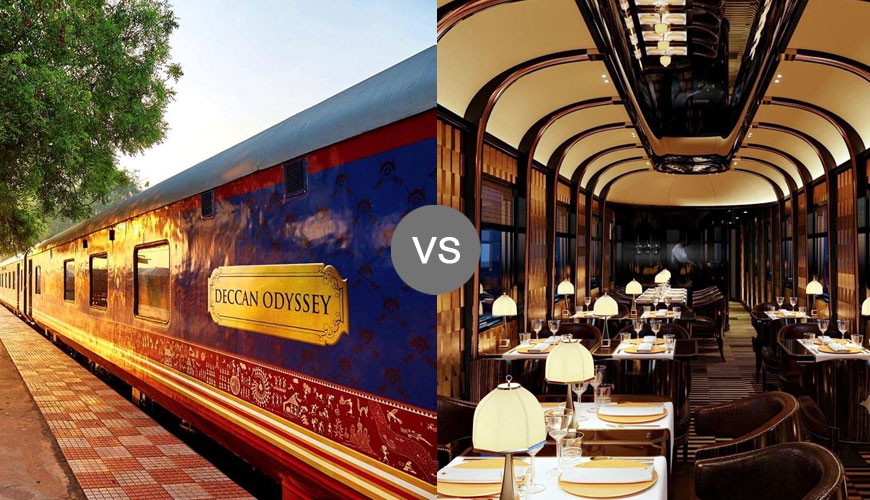
If you’re wondering whether India’s luxury trains truly match the world’s finest, the answer is: yes and often with better value per night. Maharajas’ Express, Palace on Wheels, Deccan Odyssey, and Golden Chariot frequently appear in “world’s best” lists, with Maharajas’ Express named World’s Leading Luxury Train and a winner in many previous years.
These journeys are ideal if you’re a USA, UK, or Australian traveller aged 45–75 who prefers cruise-style, all-inclusive comfort but wants deeper culture than a typical resort holiday.
Quick Facts
| Aspect | Indian Luxury Trains | Global Luxury Trains (VSOE, Royal Scotsman, etc.) |
|---|---|---|
| Signature trains | Maharajas’ Express, Palace on Wheels, Deccan Odyssey, Golden Chariot | Venice Simplon-Orient-Express, Royal Scotsman, La Dolce Vita Orient Express, Glacier/GoldenPass |
| Typical journey length | 3–4 nights or 7 nights | 1–3 nights (many routes), some longer |
| Starting price band (approx, pp per journey) | ~US$4,700–5,300+ (Golden Chariot, 5–6 nights) to ~US$4,900–8,800+ (Maharajas’ Express, 3–7 nights Deluxe) | Typically from ~US$5,100+ for VSOE overnight; specialist journeys (e.g., Royal Scotsman) from ~US$7,800+ pp |
| Best time to go | Oct–Mar (no departures in peak Indian summer and monsoon) | Mainly April–Oct; varies by route |
| Experience style | Palaces, forts, temples, tiger safaris, bustling cities, high culture and guided excursions | Old-world glamour, food and wine, European scenery |
| Ideal traveller | Culture lover, 45+ luxury traveller, cruise crowd, rail enthusiasts | Design and nostalgia lovers, celebratory trips, honeymooners |
Where do India’s luxury trains really rank among the world’s finest?
India’s top luxury trains are firmly in the global top tier, not an “also-ran” category. Maharajas’ Express has been awarded World’s Leading Luxury Train multiple times, including in 2024, competing directly with Rovos Rail’s Pride of Africa, the Blue Train, the Eastern & Oriental Express, and the Venice Simplon-Orient-Express.
Palace on Wheels and Golden Chariot crop up regularly in “world’s best luxury trains” round-ups and mainstream media coverage, often highlighted for their heritage interiors and Rajasthan/South India itineraries.
- On hardware and service: Maharajas’ Express is at least on par with VSOE, Royal Scotsman or Rovos Rail.
- On itinerary length and cultural depth: India often beats Europe’s short 1–2 night “taster” runs.
- On price-per-night: India is usually more cost-efficient than Europe’s ultra-luxury icons while still offering full-fat luxury.
What counts as the “world’s finest” in luxury rail travel?
Which criteria actually matter?
When you strip the marketing away, “world’s finest” means typically a train that delivers:
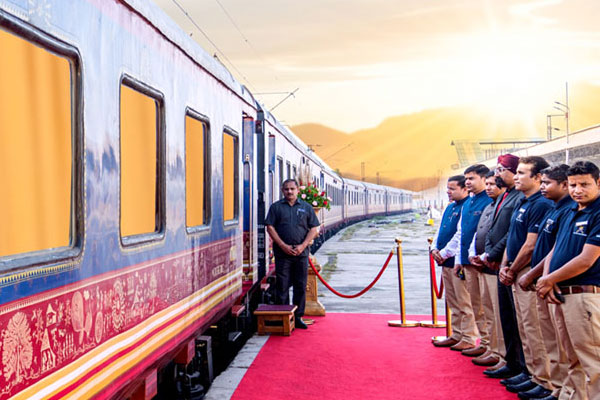
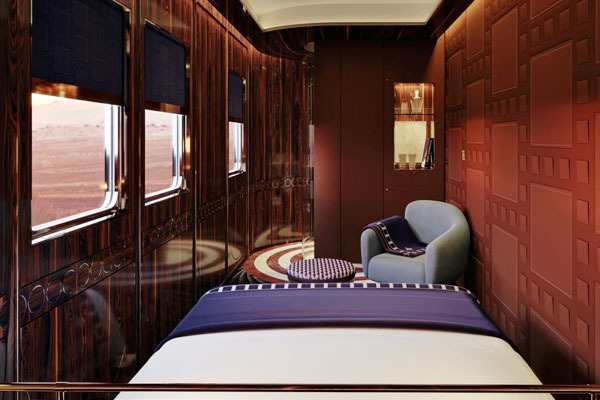
- Hardware: Spacious, well-designed cabins and suites, most with private bathrooms.
- Service: High staff-to-guest ratio, butler or steward service, 24/7 assistance.
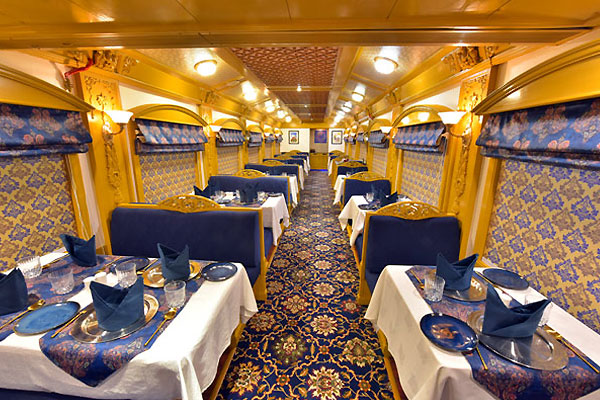
- Cuisine: Multi-course fine dining, local produce, serious wine lists.
- Route: Scenery or cultural access you cannot easily get another way.
- Inclusions: Excursions, entrance fees, guides, transfers, and often drinks.
- Awards & reputation: Repeated wins in global awards (World Travel Awards, Condé Nast, etc.), consistent guest reviews.
How do India’s luxury trains score on these criteria?
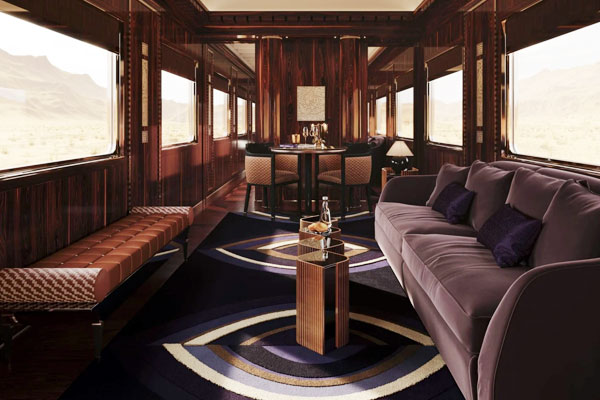
- Hardware – Maharajas’ Express cabins and suites sit at the top of global standards; Palace on Wheels and Deccan Odyssey are slightly more heritage-styled but still solid deluxe/hotel-equivalent.
- Service – Butlers, carriage hosts, and a strong hospitality culture often mean very high perceived service levels.
- Cuisine – Multi-course fine dining, strong vegetarian/vegan and special-diet support (Jain, gluten-free, etc.) – an area where Indian trains often outperform many Western trains for dietary flexibility.
- Route – Access to Taj Mahal, Rajasthan’s forts, wildlife parks, South Indian temples and coastal towns in a single, coherent trip.
- Awards – Maharajas’ Express in particular has one of the strongest award records of any train in the world.
Which Indian luxury trains genuinely compete at a world level?
Why is the Maharajas’ Express often called the world’s leading luxury train?
Because it actually is in award terms. Maharajas’ Express has repeatedly won the World’s Leading Luxury Train at the World Travel Awards, including in 2024, and is designed specifically as India’s answer to the Orient Express.
-
Routes:
- The Indian Splendour, Heritage of India, Indian Panorama, Treasures of India (pan-India and Golden Triangle focused).
- Duration: 3–4 nights (Treasures/Gems) or 7 nights (longer pan-India routes).
- Cabins: Deluxe, Junior Suite, Suite, Presidential Suite – all en-suite, with high-end décor and technology.
- Fares: For 2025–26, Deluxe cabins from about US$4,900 (shorter journey) to US$8,200–8,800 pp for 7-night routes, with suites and Presidential significantly higher.
- Inclusions: Accommodation, all meals, most drinks, excursions, entrance fees, guides, some premium alcohol and optional experiences are extra.
Where does Palace on Wheels sit among world heritage trains?
Palace on Wheels is India’s original luxury train – a 7-night loop through Rajasthan (Jaipur, Udaipur, Jaisalmer, Jodhpur, wildlife and Agra) from/to Delhi.
- Heritage: Inspired by the private coaches of Rajasthan’s former rulers, with strong “palace-on-rails” interior styling.
- Duration: 7 nights/8 days.
- Tariff: Per-night fares vary by season, cabin type and occupancy; in peak season, premium cabins can reach high five- or low six-figure INR per night (well into international luxury territory).
- Positioning: Especially strong for heritage lovers who want one classic Indian rail journey, not multiple.
What makes the Deccan Odyssey and Golden Chariot different from their international peers?
Deccan Odyssey
- Routes across Maharashtra and the Deccan plateau (including UNESCO sites and coastal regions).
- Hardware loosely modelled on Palace on Wheels with updated amenities: a Presidential suite and a strong set of cabins.
- Price band similar to that of other top-tier global trains.
Golden Chariot
- Focuses on South India – Mysuru, Hampi, temples, backwaters/Coastal Kerala/Goa, depending on the itinerary.
- Itineraries like Pride of Karnataka and Jewels of South (5 nights/6 days), plus shorter “Glimpses of Karnataka”.
- Tariffs from US$4,740–5,000 pp for 5–6 nights (Deluxe cabin, twin share).
- Currently expanding to include routes into Mumbai and Aurangabad, adding Ajanta & Ellora Caves – necessary for “world’s finest” scenic/cultural credentials.
How do India’s luxury trains compare with Europe, Africa, and the Asia-Pacific?
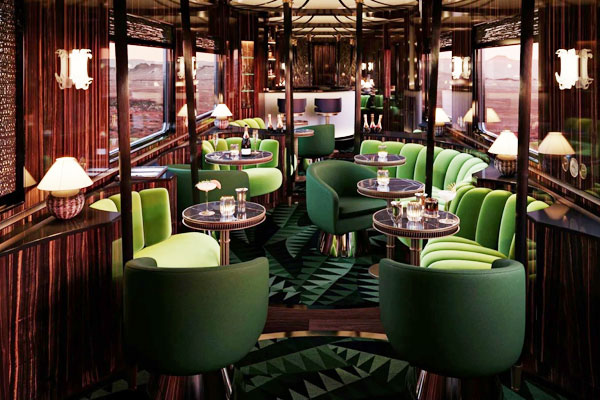
India vs Europe (Orient Express, Royal Scotsman, La Dolce Vita, etc.)
Europe’s trains are short, ultra-polished, and very expensive per night:
- VSOE: From about US$5,100+ pp for an overnight route; Grand Suites can exceed US$30,000 per night on some departures.
- Royal Scotsman: Journeys from US$7,800+ pp for multi-night itineraries, with wellness and spa concepts pushing some trips well into five figures per person.
India’s trains:
- Often gives you more nights (5–7) for a comparable or lower total outlay.
- Deliver more intense cultural immersion (forts, palaces, temples, tiger parks) vs largely scenic experiences on some European trains.
If you’re primarily chasing scenery and European glamour, Europe wins. If you judge per-night value and cultural return, India competes aggressively.
India vs Africa (Rovos Rail, Blue Train)
Africa leans heavily into landscapes and safari:
- Rovos Rail Pride of Africa and Blue Train are long-journey, all-inclusive experiences with strong reputations – and price tags to match.
India counters with:
- Comparable onboard comfort but far richer cultural sightseeing.
- For some routes, a similar or lower overall spend for 7+ nights than a single long Rovos itinerary.
India vs Asia-Pacific & Americas
- Eastern & Oriental Express, La Dolce Vita, Rocky Mountaineer, etc., offer superb scenery and high levels of comfort, but many are either shorter or more scenic than cultural.
- India’s USP in this company is density of experiences per day – more guided visits, more historical context, more “this could only be India” moments.
What itineraries and scenery do you get in India vs other regions?
What will you actually see on an Indian luxury train?
On most ILT-relevant itineraries, you should expect:
- Golden Triangle & Rajasthan – Delhi, Agra (Taj Mahal), Jaipur, Udaipur, Jaisalmer, Jodhpur, Bikaner.
- Wildlife – Ranthambore and other parks on some routes (tiger and other wildlife safaris).
- Historic interiors – step into palaces, forts, temples and havelis, not just see them from the train.
- South India (Golden Chariot): Mysuru palace, Hampi, temple towns, and perhaps coastal/backwater segments.
You’re not staring out of the window all day; you’re on and off the train constantly, with guided excursions, performances, and meals.
When do Europe or Africa offer a better scenic match?
- Europe: When your priority is mountain and lake scenery, old-world European elegance, and shorter nights onboard.
- Africa: When you want long scenic runs and safaris, and are happy with fewer cities and cultural stops.
What is the on-board experience like on India’s luxury trains vs elsewhere?
How do cabins and suites compare?
-
India:
- En-suites in almost all Maharajas’ Express and Deccan Odyssey cabins; Palace on Wheels and Golden Chariot have modernised en-suite facilities too.
- Larger top suites (especially the Maharajas’ Express Presidential) rival or exceed many European equivalents.
- Europe & Africa:
- VSOE standard cabins often share corridor bathrooms; only top suites have private facilities.
- The Royal Scotsman and Rovos Rail offer comfortable, well-appointed cabins; sizes vary by category.
How do dining, bar, and service feel on board?
-
India:
- Two restaurant cars on most trains, with multi-course menus blending Indian and international cuisine.
- Very strong vegetarian/vegan/religious diet handling – something often missing or costly elsewhere.
- Bars with a good selection of spirits; domestic brands are often included, imported labels may be extra.
-
Europe/Africa:
- Excellent culinary standards – particularly on VSOE and the Royal Scotsman – but typically less diversity of special-diet Indian options.
Service style on Indian trains tends to be warm, high-touch, and personalised; on European trains, more formal; on African trains, relaxed but attentive.
How intense are off-train excursions and daily schedules?
- India: Expect early starts, packed sightseeing days, and a fair amount of walking (at forts, palaces, and on city tours). You’re buying intensity and depth.
- Europe: Often slower pace; more emphasis on scenery and time onboard.
- Africa: Mix of early-morning game drives and downtime between runs.
When is the best time to ride India’s luxury trains vs Europe or Africa?
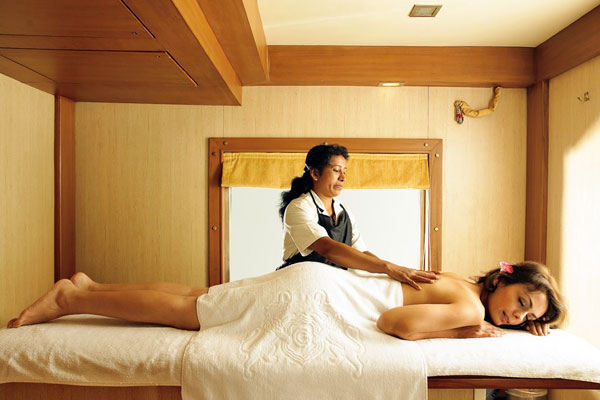
Month-by-month overview for India’s luxury trains
- Operate mainly from October to April; almost all trains do not run from May to August due to the heat and monsoon.
- Peak months: December–January (incredible, high demand, highest fares).
- Shoulder: September, early October, late March/April – slightly hotter but better availability and sometimes softer pricing.
How does this compare with Europe, Africa, and other regions?
- Europe: Prime months April–October; many trains don’t run in deep winter.
- Africa: Dry seasons (often April–October) for best safari conditions.
- Asia-Pacific/Americas: Highly variable; you match trains to monsoon / rainy seasons.
How easy is it to get to and from an Indian luxury train compared to others?
Main gateways and flight routes for India’s luxury trains
Almost all luxury train journeys in India start/end in Delhi, Mumbai, or Bengaluru (occasionally Chennai or other major cities).
- From the USA: One-stop or sometimes direct flights to Delhi/Mumbai from major hubs.
- From the UK/Europe: Multiple direct options daily.
- From Australia/NZ: Usually one-stop via Southeast Asia or the Middle East.
Where you’ll typically start in Europe, Africa, and the Asia-Pacific
- Europe: London, Paris, Venice, Edinburgh, Rome.
- Africa: Pretoria, Cape Town, and sometimes Victoria Falls.
- Asia-Pacific: Bangkok, Singapore, Fukuoka, Vancouver, etc.
Where should you stay before and after an Indian luxury train journey?
You should not land in Delhi at 3 a.m. and board a luxury train the same afternoon. The sensible play is:
- 1–2 nights pre-train in Delhi/Mumbai/Bengaluru at a good 5-star or heritage property (jet lag, buffer in case of flight delays).
- 1–2 nights post-train to decompress, shop, and enjoy a final dinner.
Which of India’s luxury trains are best suited for vs other global routes?
Are India’s luxury trains right for you?
You’re an excellent fit if you:
- Are 45–75, reasonably mobile, and happy with some early mornings and walking.
- Care about culture, history, and food, not just scenery.
- Prefer all-inclusive, hosted travel with guides and logistics handled.
- Are comfortable with structured days and shared excursions (such as on a small ship or river cruise).
When might another region be a better first choice for a luxury train?
Consider starting elsewhere if you:
- Want a one-night, low-commitment taste of luxury rail – a short VSOE leg or similar might be more manageable.
- Have severe mobility limitations and are nervous about stairs or uneven surfaces (though India can still work with careful planning and private support).
- They are susceptible to heat, crowds, or sensory overload – India is intense; some European or North American trains are gentler introductions.
What about safety, health, and comfort on India’s luxury trains?
Is it safe to travel on India’s luxury trains compared to other countries?
- Trains are fully escorted environments – controlled access, staff monitoring, and curated groups.
- Off-train excursions are conducted with licensed local guides and pre-vetted vehicles.
- Some trains mention paramedics or medical support on board; all have access to hospitals en route in significant cities.
How are health, food, and hygiene managed onboard?
- All major trains use modern kitchens with filtered water and hotel-standard hygiene protocols.
- International travellers usually report fewer issues on luxury trains than on general overland travel because everything is controlled: water, food sourcing, and kitchens.
- Special diets (vegan, Jain, gluten-free, etc.) are much easier to accommodate in India than in many other countries – but must be declared in advance.
How do you actually book luxury trains with Indian Luxury Trains?
Booking directly with individual trains is possible but fragmented. ILT centralises the entire process:
- Initial enquiry – via the ILT website (query form) or email/phone.
- Consultation call/email – clarify your dates, comfort preferences, health considerations, and past rail experience.
- Train selection & quoting – ILT compares the departure dates, cabin availability, and any promotions for Maharajas’ Express, Palace on Wheels, Deccan Odyssey, and Golden Chariot.
- Itinerary build-out – flights, pre- and post-hotel stays, and extra touring (e.g., Kerala, Goa, Varanasi, Ranthambore).
- Booking & deposit – single contract and payment with ILT; they handle train operator payments behind the scenes.
- Documentation & support – final train vouchers, hotel confirmations, transfer details, contact numbers for local support.

Comment (0)