

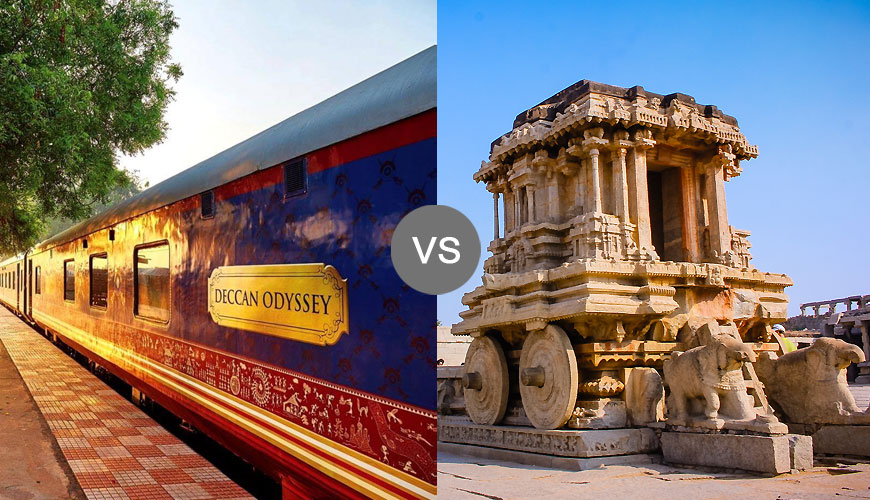
- Choose the Golden Chariot if you want a shorter (3–6 night) journey focused on South India, Karnataka, Goa, and sometimes Kerala/Tamil Nadu.
- Choose the Deccan Odyssey if you want a longer 7-night pan-India or West Coast itinerary (Mumbai–Goa–Konkan, Rajasthan, Gujarat, caves, wildlife), with a slightly more grand, “palace-on-wheels” feel and a higher price point.
Both are best from October to March, operate primarily as all-inclusive 5-star experiences, and can be booked through Indian Luxury Trains (ILT), which sells and manages these departures for international luxury travellers.
At a Glance: Golden Chariot vs Deccan Odyssey
| Feature | Golden Chariot | Deccan Odyssey |
|---|---|---|
| Core Region | South India, mainly Karnataka and Goa, sometimes Tamil Nadu & Kerala | Western & Northern India covering Maharashtra, Goa, Rajasthan, Gujarat + Golden Triangle sectors |
| Typical Duration | 3, 4 or 6 nights (itineraries like Glimpses of Karnataka, Pride of Karnataka, Jewels of South) | 7 nights / 8 days across six main itineraries like Maharashtra Splendour, Indian Sojourn, Indian Odyssey, Heritage/Cultural Odyssey |
| Coastal/Beach Focus | Goa, sometimes Kerala backwaters & Cochin, depending on itinerary | Konkan coast, Goa, Sindhudurg, plus inland caves/forts and Golden Triangle-style circuits |
| Starting Price (approx.) | From USD 2,250 to 4,740 per person per journey, depending on route and occupancy | From USD 9,330 per Deluxe cabin (single) and USD 13,300 for twin/double occupancy on 7-night itineraries/td> |
| Vibe | Intimate, warm South Indian heritage aesthetic; slightly shorter, softer itineraries | Grand, “royal blue” flagship feel; longer, more intensive sightseeing days |
| Ideal For | First-time visitors to South India, wildlife and temple lovers, guests wanting 3–6 nights | Guests who want a once-in-a-lifetime pan-India rail cruise and don’t mind a higher budget & longer days |
| Main Gateways | Bengaluru, sometimes Cochin or Goa, depending on the route | Mumbai & Delhi as primary start/end points |
Talk to ILT’s luxury rail specialists to match the right train and departure to your dates and budget.
Which is better: the Golden Chariot or the Deccan Odyssey, for your trip style?
For a typical ILT guest (50+ couple, multigenerational family, or heritage traveller), the decision breaks down simply:
Pick the Golden Chariot if you want:
- A shorter, less intense introduction to luxury trains (3–6 nights).
- A route anchored in South India – Hampi, Mysore, Bandipur, Goa, South Indian temples & heritage towns.
- A slightly lower entry price while still firmly in the luxury bracket.
- To combine the train with a longer South India or beach stay (Kerala, Tamil Nadu, Goa).
Pick the Deccan Odyssey if you want:
- A full 7-night “rail cruise” with multiple states and themes (forts, caves, wildlife, coast).
- High-impact icons like the Ajanta & Ellora Caves, Rajasthan forts, Golden Triangle sites, Konkan beaches, and Gujarat’s wildlife and salt deserts (depending on the itinerary).
- More presidential-suite-style space options and a “big flagship” feel.
- To tick off multiple bucket-list regions in one trip.
Get a personalised “Golden Chariot vs Deccan Odyssey” recommendation from ILT’s advisors.
How do the routes and itineraries actually compare?
What routes does the Golden Chariot cover?
Golden Chariot focuses on South India, especially Karnataka, with combinations of wildlife, UNESCO World Heritage sites, Mysore palaces, and Goa beaches across 3–6-night journeys.
Key Journeys:
- Glimpses of Karnataka (3N/4D) – Bengaluru – Bandipur – Mysore – Hampi – Bengaluru
- Pride of Karnataka (5N/6D) – Bengaluru – Nanjangud – Mysore – Halebidu – Chikmagalur – Hampi – Goa – Bengaluru
- Jewels of South (5N/6D) – Bengaluru – Mysore – Hampi – Mahabalipuram – Thanjavur – Chettinad – Kumarakom – Cochin – Bengaluru
What routes does the Deccan Odyssey operate?
Deccan Odyssey runs six distinct 7-night itineraries radiating from Mumbai and Delhi, covering Maharashtra’s coast, Golden Triangle circuits, Gujarat, wildlife parks, and heritage cities.
Key Journeys:
- Maharashtra Splendor – Mumbai – Nashik – Ellora Caves – Ajanta Caves – Kolhapur – Goa – Sindhudurg – Mumbai
- Indian Sojourn – Mumbai – Vadodara – Udaipur – Jodhpur – Agra – Sawai Madhopur (Ranthambore) – Jaipur – Delhi
- Indian Odyssey – Delhi – Sawai Madhopur – Agra – Jaipur – Udaipur – Vadodara – Aurangabad – Ellora Caves – Mumbai
- Heritage Odyssey – Delhi – Agra – Jaipur – Sawai Madhopur – Udaipur – Jaisalmer – Jodhpur – Delhi
- Cultural Odyssey – Delhi – Sawai Madhopur – Jaipur – Agra – Gwalior – Orchha – Khajuraho – Varanasi – Delhi
- Maharashtra Wild Trail/Hidden Treasures of Gujarat – wildlife-heavy or Gujarat-focused expeditions, including Pench, Tadoba, Sasan Gir, Kutch salt desert, Palitana, etc.
When is the best time to travel on the Golden Chariot or Deccan Odyssey?
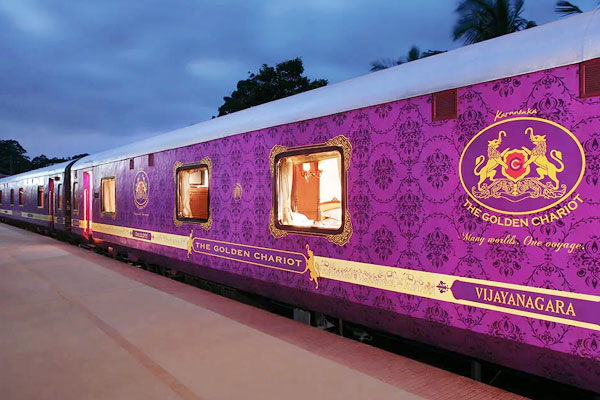
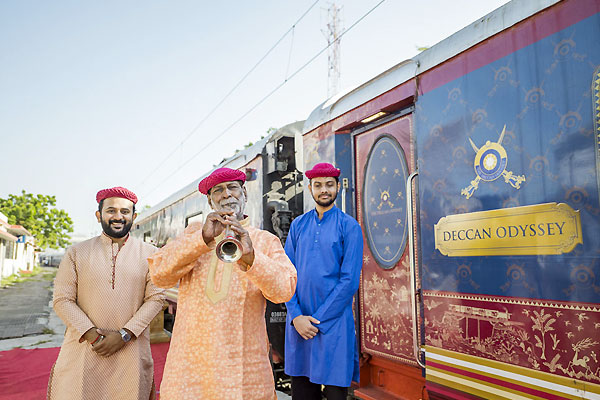
Both trains primarily operate in the cooler, drier months from roughly October to April; there are usually no departures in the core summer/monsoon months (May–August) due to heat and demand.
Month-by-month guidance:
- October–November
- Post-monsoon greenery, relatively cooler evenings.
- Excellent for wildlife (Bandipur, Ranthambore, Tadoba), caves (Ajanta–Ellora), and coastal scenery.
- December–January (Peak season)
- Cool, pleasant days in most sectors; premium departure dates.
- Higher demand for Christmas/New Year and international holidays; surcharges may apply on some departures.
- February–March
- Sweet spot for many ILT guests: comfortable weather, good tiger sightings, and fewer fog issues in North India.
- April
- Warmer days, but still workable, especially on coastal and South India routes. Good for wildlife spotting as foliage thins out.
What is the on-board experience like on each train?
How do cabins on the Golden Chariot and Deccan Odyssey compare?
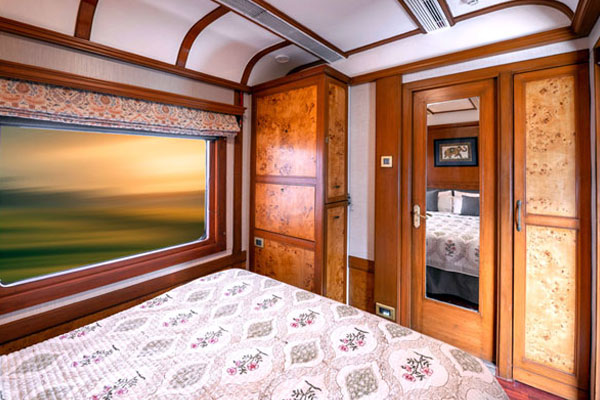
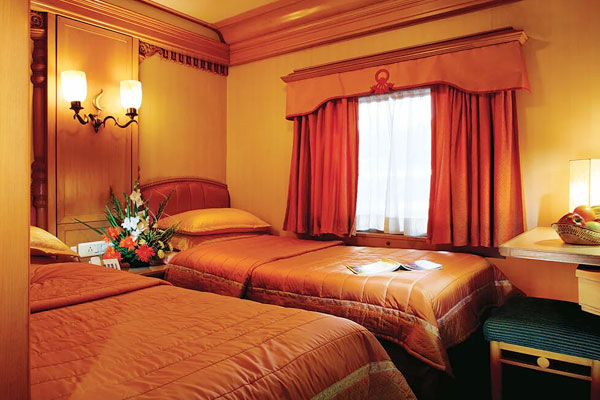
- Golden Chariot has intimate, heritage-style deluxe cabins named after South Indian dynasties, including one specially designed for guests with disabilities.
- Deccan Odyssey offers deluxe cabins and much larger presidential Suites, with slightly more “grand hotel on rails” space and configuration.
Ultra-Luxury
Golden Chariot cabins
Best for maximum luxury and flexibility, with a higher per-night budget.
- 11 guest carriages with 13 double cabins, 30 twin cabins, and one cabin for specially abled travellers.
- Decor based on Hoysala and Mysore architecture, with carved wood, muted golds and royal purples.
- Ensuite bathrooms, LCD TVs, writing desks, wardrobes, and climate control.
Best Value
Deccan Odyssey cabins
Best for value-conscious travellers wanting a genuinely royal experience.
- 11 passenger cars + 4 Presidential Suites (about 205 sq ft, roughly twice a deluxe cabin).
- 31 twin + 5 double Deluxe cabins, with a total capacity of 80 passengers, with a personal khidmatgar (attendant) per cabin.
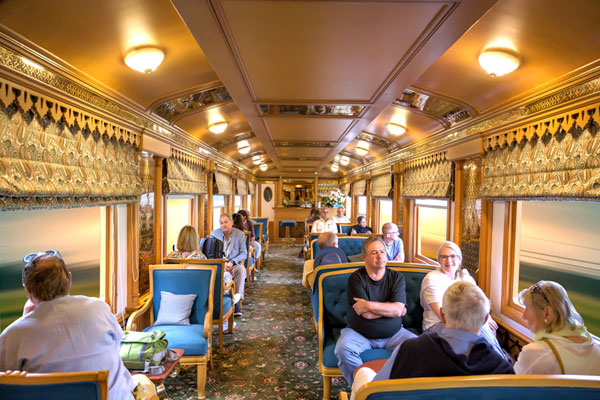
- Classical Deccan palace decor, wall-to-wall carpeting, ensuite bathrooms, modern entertainment and climate control.
How are the dining, bar and lounge services on each train?
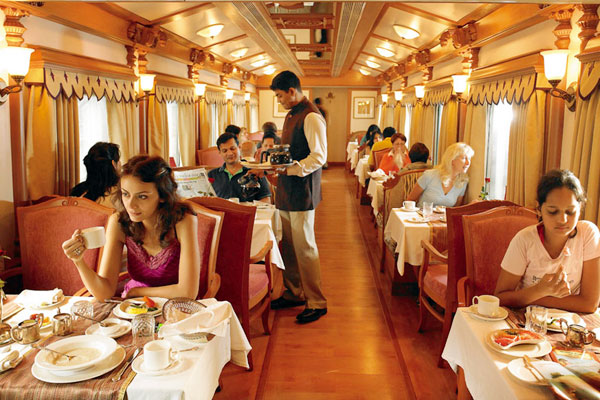
Both trains run like moving 5-star boutique hotels with fixed-menu multi-course meals and bar lounges.
Golden Chariot dining & bar
- Two restaurants, Nalapaka and Ruchi, with Halebidu & Hampi-inspired decor.
- A mix of Indian regional (Karnataka, South Indian) and international dishes, vegetarian and non-vegetarian.
- Madira bar & lounge with wine and spirits and Mysore-inspired interiors.
- Typically, one sitting per meal; guests dine together at assigned or free-seating tables.
Deccan Odyssey dining & bar
- Two restaurants, Waavar and Utsav, offer single-sitting gourmet service.
- Catering is handled by Taj Hotels & Palaces, with carefully plated Indian and international menus.
- Mumbai Hi bar offering international wines and spirits, plus non-alcoholic options.
If you want Taj-curated menus and slightly more formal dinner experiences, Deccan Odyssey has the edge; if you like somewhat more regional focus and a South Indian slant, Golden Chariot’s dining cars work well.
What about spa, gym and quiet spaces?
Both trains offer spa and fitness facilities; the Deccan Odyssey layers on more business-friendly and medical support features.
- Golden Chariot – Arogya Health Centre: an Ayurveda-focused spa cum fitness coach, with massage rooms and workout machines, plus a conference coach for talks and briefings.
- Deccan Odyssey – Ayush spa, Pankh conference car, lounge: steam bath, Ayurvedic treatments, and a full conference car with Wi-Fi and business amenities. It also lists 24-hour paramedic service, access to air ambulance, and onboard water filtration and climate control, which many older guests find reassuring.
What off-train excursions can you expect?
- Golden Chariot = South Indian palaces, Hampi ruins, Bandipur/Kabini wildlife, coastal Goa/Kerala, and temple heritage.
- Deccan Odyssey = Ajanta & Ellora Caves, Konkan coast, Goa, Mumbai, Rajasthan forts, Golden Triangle cities, Gujarat or tiger parks, depending on itinerary.
Which train is best suited to each person, and how long should you plan?
Golden Chariot is ideal for:
- Couples or friends who want 3–6 nights rather than a full week.
- First-time visitors focused on South India, temples, Hampi, palaces and a bit of wildlife.
- Guests who want to bolt on Kerala, Tamil Nadu or Goa before or after the rail journey.
Deccan Odyssey is ideal for:
- Travellers wanting a single, comprehensive 7-night Indian rail cruise.
- Repeat visitors to India who now want Ajanta–Ellora, Gujarat, deeper Rajasthan and multiple tiger parks in one itinerary.
- Guests are comfortable with longer touring days and a higher budget.
What is the realistic budget for Golden Chariot vs Deccan Odyssey?
- Golden Chariot: roughly USD 2,250–4,740 per person in a Deluxe cabin for 3–6 night itineraries, depending on route, season and occupancy.
- Deccan Odyssey: from USD 9,330 (single) or USD 13,300 (twin/double) for 7-night Deluxe cabins, and around USD 20,000 per Presidential Suite per journey (indicative).
Both trains’ tariffs typically include:
- Accommodation on board
- All main meals
- Most beverages (often tea/coffee and water; alcohol policies vary)
- Guided off-train sightseeing, entrance fees, and internal transfers during excursions
You should budget extra for:
- International and domestic flights.
- Pre/post-train hotels (ILT usually bundles 5-star options in the start/end cities).
- Visa fees, travel insurance, some drinks, optional tips and personal expenses.
Operational reality: Tariffs and taxes change by season and year, and offers (early bird, low season, and group promos) appear. Always treat online prices as guidance, not final, and ask ILT for a dated quote in your currency.
How do you reach the start and end points?
Golden Chariot gateways
- Most itineraries start and end in Bengaluru (Bangalore), sometimes with sectors involving Goa, Cochin, or a return to Bengaluru.
- International arrivals:
- Kempegowda International Airport (BLR) – direct or one-stop flights from Europe, the Middle East, and Southeast Asia, and occasional long-haul flights.
- Domestic connections:
- Frequent flights from Delhi, Mumbai, Chennai, Hyderabad, Cochin, and Goa.
Deccan Odyssey gateways
- Most itineraries start/end in Mumbai or Delhi, sometimes going from one city to the other.
- International arrivals:
- Mumbai (BOM) and Delhi (DEL) are India’s primary intercontinental hubs with strong connectivity to North America, Europe, the Middle East, and Asia.
Where to stay before and after your train journey?
Always plan at least one night before and one night after the train in a quality city hotel.
Recommended patterns:
- Golden Chariot (Bengaluru/Goa/Cochin)
- Pre-train: 1–2 nights in a 5-star Bengaluru hotel (UB City/central area) to adjust and enjoy a soft introduction.
- Post-train: 1 night in Bengaluru, Goa or Cochin, depending on itinerary and flights.
- Deccan Odyssey (Delhi/Mumbai)
- Pre-train: 2 nights in Delhi or Mumbai to beat jet lag and explore at a relaxed pace.
- Post-train: 1–2 nights to buffer against any train/flight timing changes.
What local tips, safety and etiquette do you need to know?
- Both trains are secure, controlled environments with staff on duty and a high staff-to-guest ratio.
- The onboard dress code is smart casual; bring a light shawl/jacket for air conditioning and cooler evenings.
- For temple visits (Hampi, Tamil Nadu, Varanasi, etc.), you’ll need to cover your shoulders and knees and sometimes remove footwear.
- For wildlife safaris, neutral colours and sun protection are more important than fashion.
- Drinking water on the trains is generally safe (bottled and filtered), but be conservative with street food on excursions unless your guide signs off.
- Tipping: ILT and the operating train typically outline a pooled tipping guideline per cabin per journey; stick to that rather than ad hoc amounts.
- For older guests or those with conditions, ILT should be told in advance about mobility, dietary and medical needs so cabins and coach access can be planned accordingly.
How to book the Golden Chariot or Deccan Odyssey with Indian Luxury Trains?
You pick the train, itinerary, and month; ILT handles availability checks, waitlists, payments, documentation, and pre/post add-ons via its enquiry form or direct contact.
Booking steps with ILT typically look like:
- Submit an enquiry on the ILT site (Golden Chariot or Deccan Odyssey journey page) with your route, month and cabin type.
- An ILT consultant checks the operator’s live availability and current tariff/offers.
- You receive a formal proposal (often in USD, GBP, EUR, or AUD) covering trains, hotels, and, if requested, transfers.
- You confirm with a deposit, then settle the balance before departure, in accordance with ILT’s schedule and cancellation terms.
- ILT issues travel notes, packing guidance and reporting instructions for your departure station.
Use ILT as a single point of contact rather than juggling multiple OTAs and operator sites.

Comment (0)