

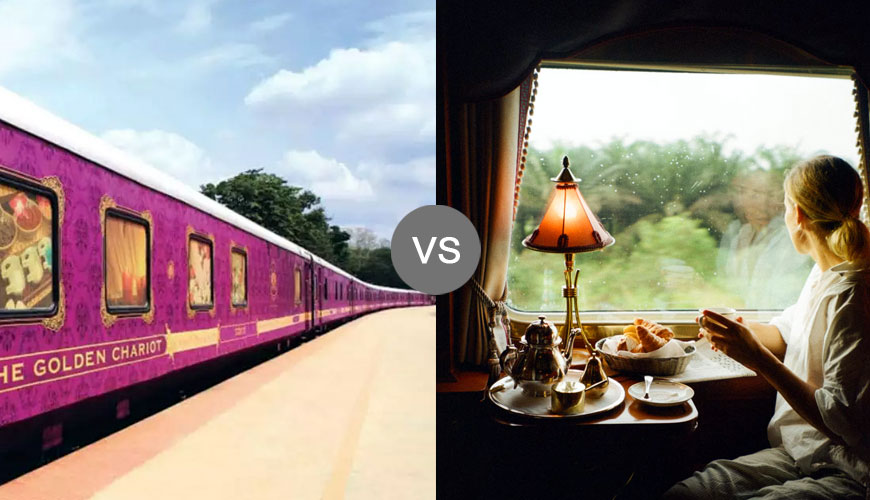
If you want maximum sightseeing in one country and a deep dive into South India’s temples, palaces, and wildlife, Golden Chariot will give you more “places per night” and usually a lower cost per day. If you want a shorter, ultra-curated journey with Belmond-level service, top chefs, and easy access from Singapore, Eastern & Oriental Express wins.
How do the routes and regions compare – South India vs Malaysia & Singapore?
- Golden Chariot focuses on South India: Karnataka, Goa, and parts of Tamil Nadu and Kerala, with circuits out of Bengaluru that typically include Mysore Palace, Hampi, coastal Goa, Bandipur National Park, Mahabalipuram, Thanjavur, Chettinad, Kochi, and Kerala’s backwaters, depending on the itinerary.
- A new extension is under process to take the Golden Chariot beyond South India into Mumbai and Aurangabad, adding the Ajanta and Ellora Caves to the mix, valuable for travellers wanting a pan-India feel in one trip.
- The Eastern & Oriental Express has historically run between Singapore and Bangkok. Still, its current post-relaunch focus is Malaysia-centric: round-trip loops from Singapore featuring Taman Negara National Park, Penang, Langkawi, and other Malaysian highlights under itineraries like Wild Malaysia and Essence of Malaysia.
The decision is blunt:
- Want South India temples + wildlife + Goa? → Golden Chariot.
- Want Malaysia rainforests + Penang + Singapore? → Eastern & Oriental Express.
How do duration and pace differ between the two trains?
Golden Chariot itineraries:
- Glimpses of Karnataka (3 Nights/4 Days): Focuses on key attractions within Karnataka, including Bandipur, Mysore, and Hampi.
- Pride of Karnataka (5 Nights/6 Days): A comprehensive journey through Karnataka’s heritage sites and wildlife, culminating in Goa.
- Jewels of South (5 Nights/6 Days): Explores the cultural and architectural treasures across Karnataka, Tamil Nadu, and Kerala.
Eastern & Oriental Express:
- Train time is generally 3 nights, often packaged into 7–9-day holidays, including 2–3 nights in Singapore and sometimes in Penang or Kuala Lumpur hotels.
Pace difference:
- Golden Chariot days can feel full-on: multiple monuments, walking, and occasional long coach rides.
- E&O days are slower, with fewer stops and more time to enjoy cabins, the observation car, and long meals.
| If your energy is limited or you dislike early mornings, E&O is easier. If you hate feeling under-programmed and want maximum “things seen per day”, Golden Chariot gives more. |
Which train feels more luxurious on board?
Hardware and service level are both high, but not identical.
Golden Chariot:
- About 44 guest cabins, with a capacity in the 80–90 guest range.
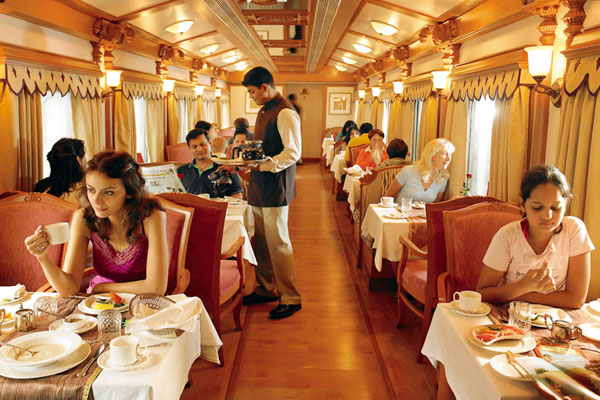
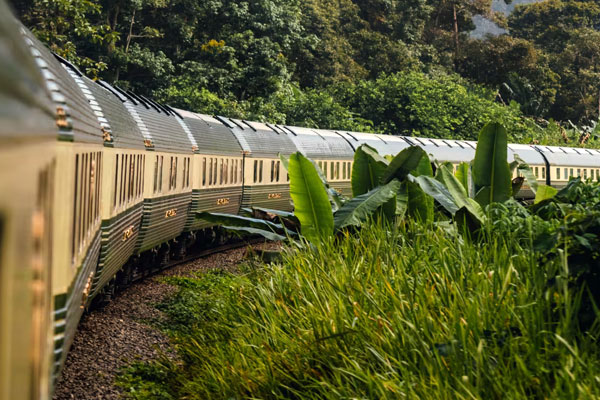
- Interiors are royal Indian – purple and gold exteriors, carved wood, silk upholstery, palace-style dining cars and bars.
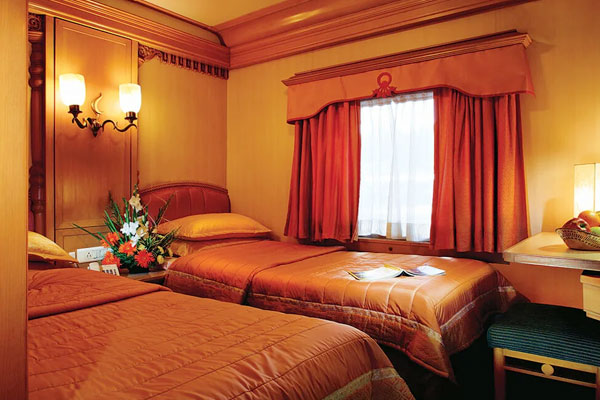
- Cabins are comfortable but compact by cruise standards, with an en suite shower/WC; good for couples who are okay with close quarters.
Eastern & Oriental Express:
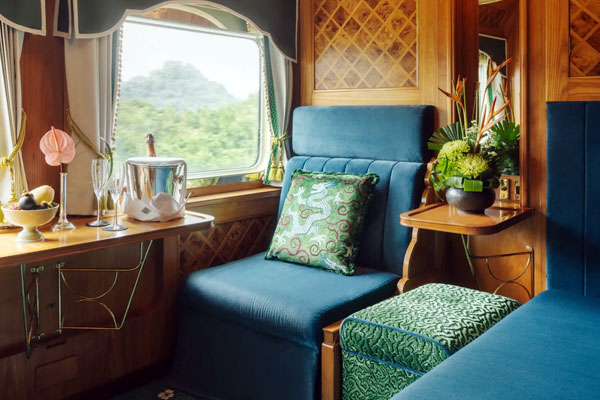
- Around 64 guests across Pullman, State, and Presidential cabins, all with ensuite bathrooms and classic cherry-wood panelled interiors.
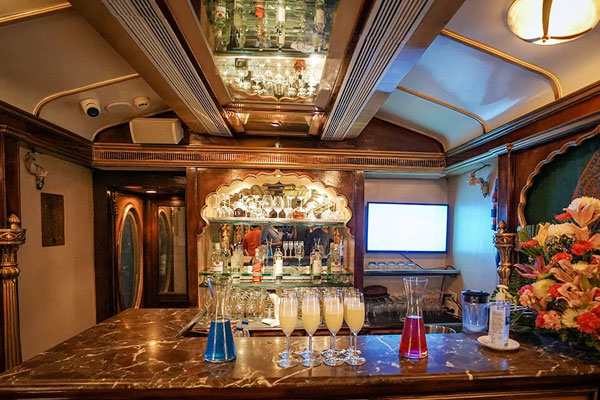
- Standout elements: piano bar car, open-air observation car, high-end mixology, and chef-driven menus sometimes co-designed by Michelin-starred chefs.
What is the Golden Chariot and what makes it special?
Golden Chariot is South India’s flagship luxury tourist train, jointly operated by IRCTC and Karnataka State Tourism Development Corporation. It runs set-departure itineraries from Bengaluru through Karnataka, Goa, Tamil Nadu, and Kerala, pairing a royal-style train with guided sightseeing, wildlife, and coastal stops.
What is life like on board the Golden Chariot?
Expect palace-inspired decor rather than minimalist modern design:
- Cabins:
- Mix of double and twin-bed cabins with ensuite showers, air-conditioning, and butler-style attendants.
- Interiors use carved wood, Indian fabrics, and dynasty-themed coach names.
- Dining:
- Two restaurant cars (often branded Ruchi and Nala) serving Indian and international menus; multi-course plated meals.
- Bar/Lounge:
- A dedicated bar car (Madira-style) with upholstered seating, live performances on some departures, and a social evening atmosphere.
- Spa & Gym:
- Ayurveda-oriented treatments and a small gym set this train apart from many others.
- You will wake up in a new city almost every day, spend much of the day out with guides, and then return to the train for cocktails and dinner. It’s immersive and mildly tiring in a good way; most 50+ travellers handle it well if they pace themselves.
Why choose the Golden Chariot over other Indian luxury trains?
- Compared to north-India trains like the Maharajas’ Express or Palace on Wheels, the Golden Chariot:
- Focuses on South India, which many repeat visitors to India haven’t seen.
- Delivers a strong UNESCO and wildlife mix (Hampi, Bandipur, Mahabalipuram, Goa churches, etc.).
- Generally, prices are slightly below the very top Indian luxury trains on a per-night basis.
- For ILT’s core audience, it’s the sweet spot between serious comfort and a price that still leaves budget for pre-/post-touring in Rajasthan, the Golden Triangle, or Kerala.
What is the Eastern & Oriental Express and how is it different?
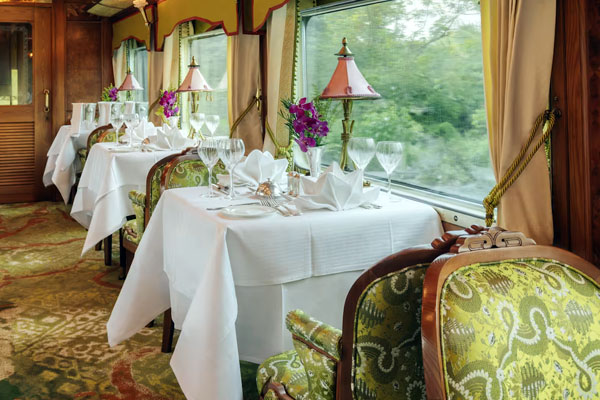
The Eastern & Oriental Express (E&O) is Belmond’s flagship luxury train in Southeast Asia – a vintage-style green and cream train with cherry-wood interiors, gourmet dining and a famous open-air observation car. It now focuses on three-night loops between Singapore and Malaysia, under itineraries such as Wild Malaysia and Essence of Malaysia, after relaunching service in 2024.
What is life like on board the Eastern & Oriental Express?
The train is designed as a moving boutique hotel:
- Cabins:
- Pullman cabins: Bunk-style by night, sofa by day.
- State cabins: Two single beds at floor level; more space and suitable for couples or friends.
- Presidential suites: Larger lounges, complimentary champagne, and additional services.
- All cabins have ensuite bathrooms, air-conditioning, and 24-hour steward call-buttons.
- Public spaces:
- Observation car with an open-air deck at the rear of the train.
- Piano bar car with live music and classic cocktails.
- 2+ restaurant cars with multi-course menus designed or curated by high-profile chefs.
- Overall feel: slower, more social and more food-driven than Golden Chariot. Perfect if you like to dress up in the evening, linger over long dinners, and chat in the bar car.
Why choose Eastern & Oriental Express for Southeast Asia?
- Choose E&O if you:
- Prefer a shorter rail segment (3 nights) embedded in a larger SE Asia itinerary.
- Value the Belmond brand, chef-driven food and wine, and a strong bar/lounge culture.
- Want a Singapore-centric trip with easy long-haul flight connections.
When is the best time to ride the Golden Chariot or the Eastern & Oriental Express?
Both trains primarily operate in the drier, cooler months of their respective regions, and both largely avoid the peak monsoon. Timing matters a lot for older travellers who struggle with intense heat and humidity.
When is the best season for the Golden Chariot in South India?
Golden Chariot generally runs in the Oct–March window:
- October–November:
- Lush landscapes, some lingering showers (esp. coastal/ Kerala sectors).
- Good for photography; slightly more humid.
- December–February:
- Coolest and driest; ideal for older travellers and heavy sightseeing days.
- Peak season → higher demand; Christmas/New Year supplements often apply.
- March:
- Warmer, especially inland and in Goa; still manageable with air-con and sensible pacing.
- Fewer crowds than December–January.
- Avoid late April–September; the train either doesn’t run, or conditions are uncomfortable for luxury touring.
When is the best season for the Eastern & Oriental Express in Malaysia?
E&O’s itineraries are scheduled to keep you away from worst-case monsoon weather, but you’re still in the tropics:
- February–April:
- Generally reliable weather in Peninsular Malaysia; good visibility and comfortable evenings.
- November–early February:
- Popular for cooler evenings and occasional showers, especially on the east coast, but many itineraries aim for the west coast corridor.
- Mid-year (varies by departure):
- Some remarkable journeys run, but the humidity is higher; you need to be comfortable with sauna-like conditions outdoors.
How do you get to the starting points?
How do you reach Bengaluru for the Golden Chariot?
- Golden Chariot departures are organised out of Bengaluru (Bangalore).
- From the USA/Canada – typical routings via Dubai, Doha, London, Frankfurt, or Singapore.
- From the UK/Europe – non-stop or one-stop connections from major hubs to BLR.
- From Australia/New Zealand – via Singapore, Bangkok, Kuala Lumpur, or the Gulf hubs.
- For ILT’s demographic, the sensible rule is:
- Arrive in Bengaluru at least 1 night (ideally 2) before embarkation to allow for flight delays and jet lag.
- Let ILT arrange a short pre-train Bengaluru or Mysore stay so you’re already in the time zone when the train leaves.
How do you reach Singapore for the Eastern & Oriental Express?
- The Eastern & Oriental Express usually departs from Singapore’s Woodlands Train Checkpoint or an equivalent rail facility.
- From North America – direct flights to Singapore (SFO/LAX/EWR, etc.) or via Tokyo, Hong Kong, Dubai, or Doha.
- From the UK/Europe – non-stops from London, Frankfurt, or Paris, or via Gulf hubs.
- From Australia/NZ – direct or one-stop via various SE Asia hubs.
How do the itineraries and sightseeing compare?
At a high level:
- Golden Chariot gives you more stops, more monuments, and more variety in a single country.
- E&O gives you fewer stops but more profound experiences, with time to enjoy the train itself.
What will you see on Golden Chariot journeys?
- Depending on the itinerary, expect combinations of:
- Royal heritage: Mysore Palace; Chettinad mansions.
- UNESCO sites: Hampi, Mahabalipuram, Goa churches, and Thanjavur’s Big Temple.
- Wildlife: Bandipur National Park safaris on many routes.
- Backwaters & coast: Kerala backwaters, Kochi harbour, Karnataka/Goa beaches.
- Possible extensions: Ajanta and Ellora Caves when the Mumbai/Aurangabad extension is fully live.
- Days are structured: breakfast on board, off for guided touring, lunch on board or at a hotel, more sightseeing, then back to the train.
What will you see on Eastern & Oriental Express journeys?
- Current itineraries emphasise:
- Rainforest and nature: Taman Negara National Park, with guided walks and wildlife-watching.
- Heritage cities: Penang’s George Town (UNESCO), Kuala Lumpur’s colonial core on some routes.
- Coastal scenery: Island or coastal day trips depending on route (e.g., Langkawi).
- Culinary immersion: Market visits, hawker-centre tastings, chef-hosted events tied to specific departures.
- You’ll usually have one main off-train excursion per day, which is easier on joints and stamina than Golden Chariot’s often fuller days.
Practical tips, safety & etiquette
What should you pack for a luxury train journey in tropical Asia?
- Lightweight, breathable clothing (linen, cotton) in neutral colours.
- A light jacket or shawl for air-conditioned interiors.
- Closed-toe walking shoes with grip – you will be on uneven stone at temples and ruins.
- Prescription meds + simple travel pharmacy, plus MOS-friendly insect repellent for jungle stops.
- Smart-casual evening wear – collared shirts, dresses, or similar for both trains; formal black-tie is not mandatory but encouraged on some nights on E&O.
How do health, mobility and safety work on these trains?
- Both trains are safe, monitored environments; baggage stays with you in your cabin; staff are trained to assist older guests.
- Motion: the ride is generally smooth; if you’re motion-sensitive, carry medication.
- Mobility: there are steps and narrow corridors; neither train is perfect for severe mobility issues, but many older travellers manage with a cane or walking sticks.
- Medical: simple issues can be handled with onboard first aid and local clinics; severe conditions require proper travel insurance with evacuation cover.
What are the dress codes and cultural etiquette?
- On board, think “smart resort” rather than beachwear: no swimwear or athletic shorts in dining cars.
- At temples and religious sites, cover shoulders and knees; carry a light scarf.
- Tipping customs vary by operator and market; ILT will brief you before travel so you’re not guessing on envelopes at the end.
How do you book through Indian Luxury Trains, and what do they actually do?
ILT is a specialist booking concierge for Indian luxury trains, including the Golden Chariot, with decades of India-touring experience.
ILT can typically handle:
- Golden Chariot cabin booking and ticketing.
- Pre/post hotels, internal flights, private transfers, and guides.
- Integrating visa timing, domestic flight schedules, and realistic connection buffers (significant for older travellers).
What does the enquiry and booking process look like?
In simple terms:
- You send dates, party size, budget band, and any health/mobility constraints.
- ILT replies with 1–2 realistic skeleton itineraries and indicative pricing.
- You tweak; ILT locks in train cabins and critical hotel nights first, then tidies up the rest.
- Closer to departure, you receive a consolidated, day-by-day plan with contacts and emergency numbers.

Comment (0)