

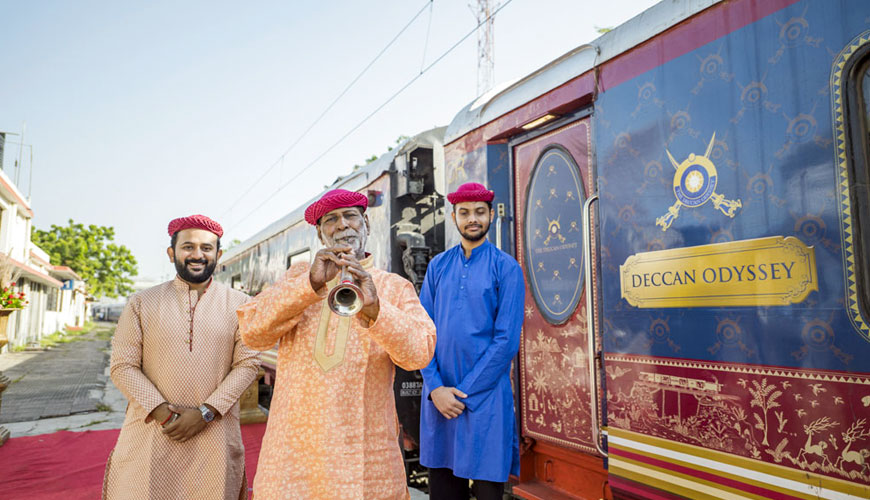
For many eco-conscious travellers from the USA, UK, and Australia, a week on India’s royal trains can be one of the most responsible ways to see a lot of the country in comfort, especially compared to flying between cities and staying in large resort chains.
Eco-Friendly Luxury Train Travel in India – At a Glance
| Aspect | Snapshot |
|---|---|
| Main trains covered | Maharajas’ Express, Palace on Wheels, Deccan Odyssey, Golden Chariot |
| Typical journey length | 4–8 nights onboard, usually part of a 10–16 day India trip |
| Best time to travel | October–April for most routes; shoulder months can be less crowded and often “greener” overall |
| Eco angle vs normal touring | Fewer internal flights, shared energy use, limited hotel hopping, curated excursions, and growing onboard green initiatives |
| Starting price band (per person) | Roughly USD 4,000–8,000+ per 7-night journey in a standard cabin, higher for suites (varies by season and train) |
| Ideal travellers | Comfort-seeking couples and friends 45+, honeymooners, multi-gen families, solo travellers, happy to pay a premium for simplicity and support |
| Key eco-initiatives | Energy-efficient lighting & HVAC, water-saving fixtures, waste segregation and recycling, reduced single-use plastics, local sourcing, community-linked excursions |
What do we actually mean by “eco-friendly luxury train travel in India”?
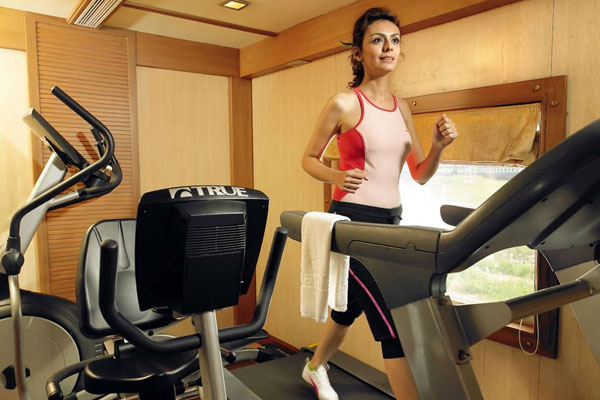
‘Eco-friendly’ here means lower impact and better practices than typical multi-city touring, not a perfectly carbon-neutral holiday. You’re still flying long-haul to India, but once you’re here, you:
- Swap a string of domestic flights and road transfers for one continuous rail journey.
- Stay in one moving hotel instead of turning over multiple hotel rooms (and all the extra laundry, electricity and food waste each property generates).
- Travel on trains that increasingly adopt energy-efficient tech, better water and waste management, and more responsible sourcing.
Are Indian luxury trains really greener than flying between cities?
In most cases, yes, per kilometre and per traveller, but not magically carbon-free.
- Rail travel generally produces less CO₂ per passenger-kilometre than flying or driving, especially when trains run close to capacity.
- A typical 7-night luxury train loop can replace 3–5 internal flights plus a string of hotel check-ins, check-outs and long road transfers.
- Shared kitchens, bar cars, HVAC and laundry onboard usually mean less energy and water per person than if the same group were scattered across several hotels.
So the honest framing is: you’re choosing one of the greener, high-comfort options available today, especially for a complex, multi-city cultural itinerary in India.
How are India’s royal luxury trains becoming more sustainable?
Across the Maharajas’ Express, Palace on Wheels, Deccan Odyssey and the Golden Chariot, the main eco-initiatives fall into six buckets.
What energy-saving and emissions-reduction initiatives are in place on board?
You’ll increasingly see:
- LED lighting and more efficient HVAC systems in cabins, corridors and lounges.
- More innovative generator use and anti-idling practices when trains are stationed.
- Gradual shift toward greater use of electrified sections of the network as Indian Railways electrifies remaining routes.
You won’t see battery or hydrogen-powered luxury trains in India yet; those technologies are still in early stages, but the underlying rail system is moving in a greener direction.
How is water managed more responsibly on luxury trains?
Water is finite on a moving train, so being efficient is both practical and eco-friendly:
- Low-flow showers and taps in cabins.
- Careful scheduling of tank refills and, on some trains, partial grey-water recycling for non-potable uses.
- Towel and linen policies that allow guests to opt for reduced change-overs without sacrificing hygiene.
What waste-management and plastic-reduction steps are used?
On better-run luxury trains, you’ll typically find:
- Segregated waste bins for recyclables and organic waste, with proper disposal at major stations.
- A shift away from miniature toiletries to refillable dispensers in many cabins.
- Glass or sturdy reusable bottles in cabins and restaurants, with filtered water refills, cutting down on single-use plastic.
Do cabins and amenities use eco-friendly materials?
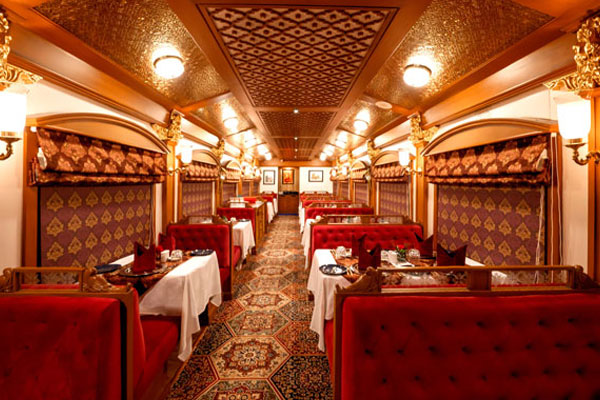
You’re not sleeping in a bare-bones eco-lodge. You’re in a wood-panelled, heritage-inspired cabin with:
- Biodegradable bathroom amenities are available (soaps, shampoos, and shower caps).
- Increasing use of organic cotton linens and towels on some routes.
- Durable, long-life furnishings rather than “fast décor” replaced every couple of years.
How do dining and sourcing support sustainability?
Kitchens on royal trains are tight, which naturally pushes toward shorter menus and less wastage:
- Heavy emphasis on regional recipes and local ingredients – Rajasthan on Palace on Wheels, Maharashtra and Gujarat on Deccan Odyssey, South India on the Golden Chariot, etc.
- Smaller, curated menus that quietly cut down food waste while still feeling indulgent.
- Sometimes, organic or sustainably farmed produce is available on specific departures.
How do luxury trains support communities and conservation?
A big part of “responsible” is where your money goes:
- Local guides, local drivers and local performers at off-train stops; your spend supports regional jobs rather than just big chains.
- Entry fees and permits that fund monument preservation and wildlife parks (e.g. Ranthambore, Pench, Hampi, Ellora).
- In some cases, visits to craft cooperatives, rural villages or conservation projects (wildlife, heritage or community tourism).
How do specific trains compare in terms of eco-initiatives?

You’re ultimately choosing between four leading brands; all offer high comfort, but their routes and eco priorities differ.
What eco practices stand out on the Maharajas’ Express?
Maharajas’ Express is the newest of the Indian luxury trains and has leaned into modern systems from the start. In broad terms, you can expect:
- Energy-efficient systems (LED lighting, modern HVAC).
- Eco-friendly amenities like biodegradable toiletries and quality linens built to last.
- Some emphasis on digital documentation (tickets, manifests) to reduce paper use.
- Routes that include significant heritage and wildlife stops (Agra, Jaipur, Ranthambore, Varanasi, etc.), where fees support conservation and preservation.
How does Palace on Wheels balance heritage with sustainability?
Palace on Wheels is the original Indian luxury train, with a strongly heritage-driven design. From a responsible-travel lens:
- It runs a fixed 7-night Rajasthan loop, which keeps logistics simple and encourages slow, steady travel rather than frantic “tick-box” rushing.
- You visit a tight set of forts, palaces and desert landscapes; your spending is concentrated in a region that depends heavily on tourism.
- Like others, it has upgraded lighting/HVAC over time and tightened waste management, but heritage interiors limit how radical retrofits can be.
What about Deccan Odyssey’s routes and eco footprint?
Deccan Odyssey’s strength lies in its itinerary design: Maharashtra, Gujarat, Rajasthan, the Deccan Plateau, wildlife, and UNESCO sites, all in a handful of themed routes. Eco-responsible advantages:
- Strong focus on UNESCO sites (Ajanta, Ellora), national parks and historic cities, where visitor fees matter.
- Onboard upgrades similar to the other trains – LED lighting, better HVAC, structured waste handling.
- Good fit for travellers who want a mix of culture and wildlife without stitching together multiple internal flights.
How is the Golden Chariot integrating eco-friendly practices in South India?
Golden Chariot focuses on South India: Karnataka, Tamil Nadu, Kerala, and Goa. From a responsibility angle:
- Routes include World Heritage sites and protected landscapes (Hampi, Badami, wildlife parks, backwaters), where the train’s spend supports both conservation and local jobs.
- The train itself has undergone modernisation and refurbishment, bringing it closer to the others in terms of energy efficiency and comfort.
- South India’s milder winter climate can mean less extreme heating/cooling demands in some months.
When is the best time to take an eco-conscious luxury train trip in India?
Most luxury train departures run from roughly September/October to April, with the densest schedules between November and March. From a sustainability and comfort perspective:
- November–February gives the most pleasant daytime temperatures in North and Central India; you’ll rely less on power-hungry air-conditioning on board and during excursions.
- October and March/early April are excellent shoulder months: fewer crowds at key sites, slightly lower demand on local infrastructure, still-good weather.
- Monsoon-season departures (when offered) can be beautiful and quieter, but flooding risk and heat in some zones need to be considered on a case-by-case basis.
What does a “typical day” on an eco-conscious luxury train look like?
Morning
- Wake to tea/coffee in your cabin as the train glides into a new landscape.
- Breakfast in the dining car – made-to-order eggs and South Indian or North Indian options using mainly local ingredients.
- Join a small-group excursion: a fort, palace, temple complex or national park, led by local guides.
Afternoon
- Return for lunch; the kitchen works on smaller, pre-planned menus to avoid food waste.
- Rest in your cabin while the train travels over a longer stretch; this is when efficient HVAC and good insulation matter most.
- Optional spa therapy or just reading in the lounge, using refillable water bottles, not single-use plastic.
Evening
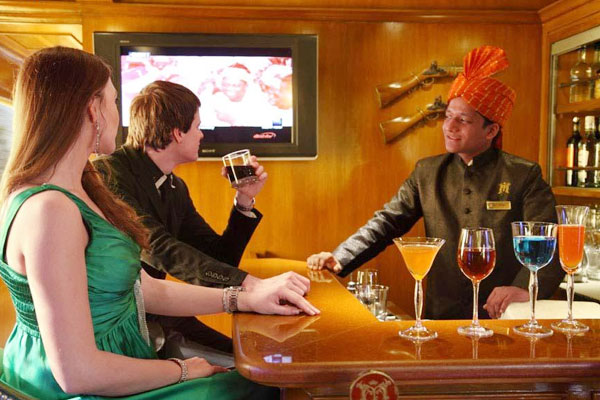
- Sundowner in the bar car, sometimes with local musicians or cultural performances.
- Dinner (often with vegetarian and lighter options highlighted).
- The train rolls overnight, reducing daytime road traffic and hotel energy use.
How can you travel more responsibly on India’s luxury trains?
You can meaningfully reduce impact without sacrificing comfort:
- Travel in shoulder season, where possible, to ease pressure on popular sites.
- Reuse towels and linens instead of requesting daily changes.
- Carry a reusable water bottle and top up from onboard filtered water rather than buying plastic bottles.
- Choose vegetarian or lower-meat options some days – easy in India and significantly reduces your food footprint.
- Avoid bringing piles of single-use plastics from home (travel miniatures, plastic-wrapped snacks).
- Stick to small-group excursions and follow your guide’s instructions in wildlife areas and heritage sites.
- Buy locally made crafts rather than imported souvenirs.
- Offset your long-haul flights through a reputable scheme that funds renewables or conservation.
- Keep the air conditioning at a comfortable, not freezing, temperature, and switch off the lights when you leave the cabin.
- Give staff and operators feedback when you see positive eco-initiatives – it helps those programmes grow.
Are health, hygiene and medical care compatible with eco initiatives onboard?
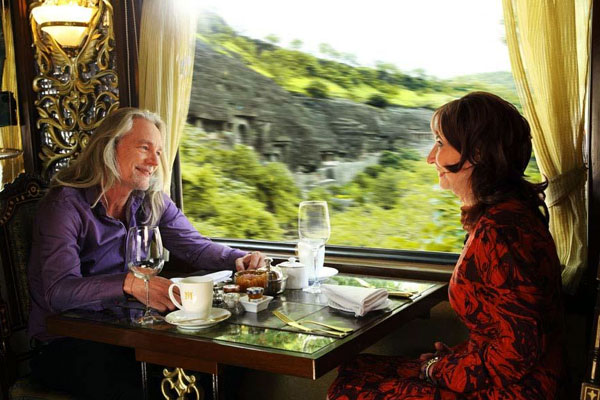
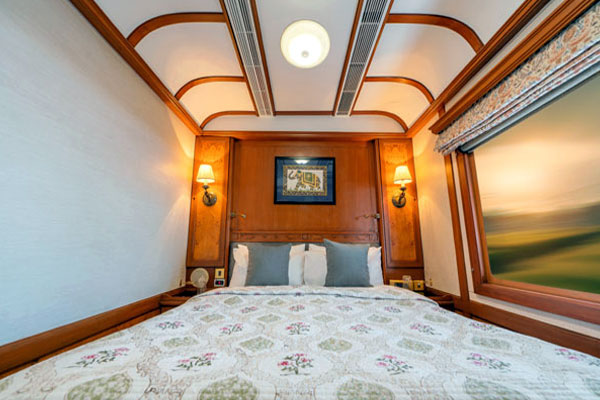
Yes. These trains were designed as five-star hotels on rails, not eco-hostels.
- Cabins and public areas are kept to high cleanliness standards, aligned with international expectations, while still reducing waste and water usage.
- Drinking water is filtered and treated; you can safely drink what’s provided on board and in most partner hotels ILT uses.
- Staff are trained in first aid and emergency protocols, and routes are planned so that severe cases can be transferred to quality hospitals in nearby cities.
How does ILT help you choose the most responsible luxury train itinerary?
Indian Luxury Trains specialises exclusively in luxury rail in India and works with these trains season after season. For an eco-conscious traveller, ILT adds value in three main ways:
- Matching your values to the right train and route
- If you care most about wildlife and conservation, routes that include Ranthambore or central India’s parks make sense.
- If your priority is heritage preservation, then Rajasthan and UNESCO-heavy itineraries score higher.
- Structuring the trip to minimise wasteful routing
- Advising on multi-city flight plans, rail connections and pre/post extensions that reduce extra flights and hotel churn.
- Monitoring operator changes and eco initiatives over time
- Because ILT sells across all trains and departure dates, it sees how menus, amenities and excursion patterns change and can steer you toward departures that walk the talk, not just use green buzzwords.
How to book an eco-conscious luxury train journey with Indian Luxury Trains
- Enquire – Share your preferred month, approximate budget, interests (wildlife/culture/rail focus) and any medical/mobility needs.
- Design – ILT proposes 2–3 train + itinerary options that best match your comfort and sustainability goals, explaining pros/cons clearly.
- Confirm – Once you choose, ILT confirms cabins, dates and inclusive pricing, then rings in trusted hotels and local partners for your pre/post nights.
- Travel Support – You have on-the-ground support for transfers, last-minute schedule tweaks, and any medical or other assistance you need along the way.

Comment (0)